10 Best Fitness Journal Ideas to Transform Your Health Journey in 2025

Let’s be real—tracking your fitness journey shouldn’t feel like homework. Whether you’re a gym newbie or a seasoned athlete, having the right fitness journal ideas can be the game-changer between giving up after two weeks and actually sticking to your goals. In this comprehensive guide, we’ll explore ten innovative fitness journal ideas that’ll help you stay accountable, measure your wins, and keep that motivation fire burning bright.
Why Your Fitness Journey Needs a Journal (Like, Yesterday)
Here’s the thing: most people who start a fitness routine without tracking their progress end up spinning their wheels. You know what I’m talking about—hitting the gym consistently but never really knowing if you’re making headway. That’s where fitness journaling swoops in to save the day.
Keeping a fitness journal isn’t just about scribbling down reps and sets. It’s your personal roadmap, your cheerleader, and your reality check all rolled into one. Research shows that people who track their fitness activities are significantly more likely to achieve their health goals compared to those who don’t (American Journal of Preventive Medicine). Plus, there’s something incredibly satisfying about flipping back through pages and seeing how far you’ve come—talk about a motivational boost!
Whether you’re team digital or old-school pen-and-paper, the best fitness journal ideas blend structure with flexibility. They give you enough guidance to stay on track without making you feel like you’re filling out tax forms. So, let’s dive into the ten most effective fitness journal ideas that’ll revolutionize how you approach your health goals.
The Classic Workout Log: Your Training Bible
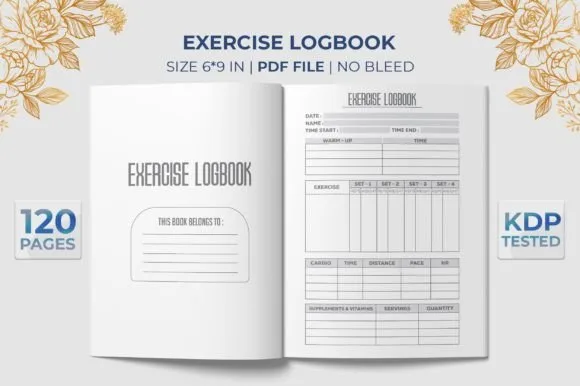
Ah, the workout log—the OG of fitness journal ideas. This tried-and-true method never goes out of style for good reason. It’s straightforward, effective, and gives you a crystal-clear picture of your training patterns.
Here’s what makes a killer workout log:
- Exercise name and category (strength, cardio, flexibility)
- Sets, reps, and weight used for resistance training
- Duration and intensity for cardio sessions
- Rest periods between sets
- Personal notes about how you felt during the workout
The beauty of a workout log lies in its simplicity. You’re not overthinking it—you’re just documenting what you did, plain and simple. Over time, these entries become invaluable data points. Did you notice your squat weight increasing steadily? That’s progressive overload in action! Feeling sluggish on certain days? Maybe there’s a pattern related to sleep or nutrition worth investigating.
Don’t underestimate the power of consistency here. Even if your workout wasn’t Instagram-worthy, logging it reinforces the habit and keeps you accountable. Plus, when you’re planning your next session, you’ll know exactly where you left off—no more “wait, what weight did I use last time?” moments at the gym.
Nutrition Diary: Fueling Your Fitness Machine
You’ve probably heard the saying “abs are made in the kitchen,” right? Well, there’s truth to that cliché. Your nutrition diary is where fitness goals get real support because, let’s face it, you can’t out-train a bad diet.
A comprehensive nutrition tracker should capture:
- Daily meals and snacks with approximate portions
- Water intake throughout the day
- Macronutrient breakdown (protein, carbs, fats)
- Energy levels and hunger patterns
- Any supplements or vitamins taken

Now, here’s where I’ll level with you—tracking every morsel can feel tedious at first. But you don’t need to become obsessed or pull out a food scale for every meal. The goal is awareness, not anxiety. After a few weeks of consistent tracking, you’ll start recognizing patterns. Maybe you’re not getting enough protein post-workout, or perhaps your energy crashes around 3 PM because lunch was too carb-heavy.
Studies indicate that keeping a food diary can double weight loss results and improve dietary adherence (Kaiser Permanente Center for Health Research). The act of writing things down creates mindfulness around eating habits. You’ll think twice before mindlessly snacking when you know you’ll have to log it later—it’s like having a gentle accountability partner in your pocket.
Progress Photos and Measurements Hub
Listen, the scale is a liar. Okay, maybe not a complete liar, but it definitely doesn’t tell the whole story. That’s why progress photos and body measurements deserve their own dedicated section in your fitness journal ideas arsenal.
This visual documentation system includes:
- Monthly or bi-weekly progress photos from multiple angles
- Body measurements (chest, waist, hips, arms, thighs)
- Body fat percentage (if you have access to accurate testing)
- Clothing fit references (“my favorite jeans feel looser”)
- Subjective assessments of how you feel in your body
The psychological impact of seeing visible progress cannot be overstated. There’ll be weeks when the scale doesn’t budge—or worse, creeps up despite your best efforts. During those frustrating times, pulling out your progress photos can be the difference between throwing in the towel and trusting the process. Maybe you’ve lost inches around your waist even though your weight stayed the same. That’s muscle replacing fat, baby!
Pro tip: take your photos at the same time of day, in the same lighting, wearing similar clothing. Consistency matters here because you want accurate comparisons, not optical illusions created by different lighting angles.
Goal-Setting Framework: Your Fitness Vision Board
Here’s something nobody talks about enough: vague goals lead to vague results. “Getting fit” isn’t a goal—it’s a wish. A proper goal-setting section transforms your fitness journal from a passive record-keeper into an active achievement tool.
Your goal framework should distinguish between:
- Short-term goals (weekly or monthly targets)
- Medium-term goals (quarterly milestones)
- Long-term goals (annual aspirations)
- Process goals (habits to build) versus outcome goals (results to achieve)
Let’s get specific. Instead of “lose weight,” try “lose 1-2 pounds per week by tracking calories and exercising five days weekly.” See the difference? One is measurable and actionable; the other is just wishful thinking. According to goal-setting research, specific and challenging goals lead to higher performance than vague or easy goals.
Breaking big goals into smaller chunks makes them less intimidating and more achievable. Want to run a marathon? Start with a 5K. Eyeing that pull-up bar? Begin with assisted variations. Each small win builds momentum and confidence, creating a positive feedback loop that propels you forward.
Habit Tracker: Building Your Fitness Lifestyle
Motivation gets you started, but habits keep you going. That’s why incorporating a habit tracker into your fitness journal ideas collection is absolute gold. This section isn’t about workouts per se—it’s about the lifestyle factors that support your fitness journey.
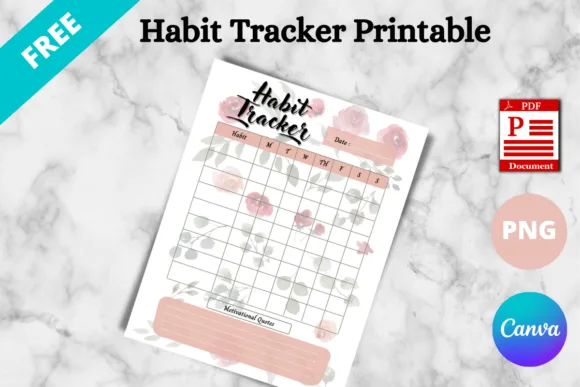
Track habits like:
- Hours of sleep per night
- Daily steps or general movement
- Stress management practices (meditation, yoga, journaling)
- Rest days and active recovery
- Meal prep sessions
- Pre-workout routines
Research on habit formation suggests it takes anywhere from 18 to 254 days to form a new habit, with an average of 66 days (European Journal of Social Psychology). A visual habit tracker helps you see your consistency patterns at a glance. String together enough days, and you’ll be amazed at how automatic these behaviors become.
The beauty here is recognizing that fitness isn’t just about gym time. Quality sleep affects recovery and hormone regulation. Stress management impacts cortisol levels and fat storage. Consistent meal prep prevents the “nothing healthy to eat” excuse. When you track these supporting habits alongside your workouts, you’re creating a holistic fitness ecosystem rather than just grinding through isolated gym sessions.
Workout Split Planner: Strategic Training Design
If you’re serious about results, randomly showing up to the gym and “winging it” won’t cut it. A workout split planner helps you organize your training week strategically, ensuring you’re hitting all muscle groups adequately while allowing proper recovery time.
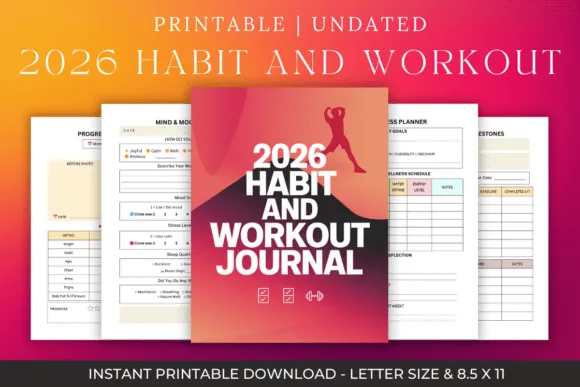
Common split approaches include:
- Full-body workouts (3x per week, great for beginners)
- Upper/lower split (4x per week, balanced approach)
- Push/pull/legs (6x per week, intermediate to advanced)
- Body part split (5-6x per week, advanced lifters)
Your planner should outline which muscle groups you’re targeting each day, what types of exercises you’ll focus on, and how this fits into your overall weekly schedule. This prevents the common mistake of accidentally overtraining certain muscles while neglecting others. Nobody wants imbalanced gains or repetitive strain injuries, right?
Additionally, planning your splits helps with time management. You know exactly what you’re walking into each gym session, which eliminates decision fatigue and keeps workouts efficient. No more standing around thinking, “What should I do next?” You’ve already mapped it out—just show up and execute.
Personal Records and Milestones Log
Let’s talk about celebrating wins, because honestly, we don’t do it enough. A dedicated section for personal records (PRs) and milestones turns your fitness journal into a trophy case of badassery. This is where you get to brag to yourself about all the awesome things your body can do.
Document achievements like:
- New weightlifting PRs (heaviest squat, deadlift, bench press)
- Cardiovascular improvements (fastest mile, longest run)
- Flexibility milestones (finally touching your toes, achieving a split)
- Endurance feats (first unassisted pull-up, holding a plank for 2 minutes)
- Competition results or event completions
Here’s the psychological magic: when motivation dips—and it will, because we’re human—flipping to this section reminds you what you’re capable of. You’ve done hard things before; you can do hard things again. Each milestone is proof that your effort pays off.
Plus, tracking PRs helps prevent stagnation. If your bench press has been stuck at the same weight for three months, that’s valuable feedback. Maybe it’s time to adjust your programming, focus on accessory work, or address form issues. Progress should be progressive, after all.
Workout Mood and Energy Tracker
This one’s a game-changer that doesn’t get enough credit among fitness journal ideas. Your workout mood and energy tracker helps you understand the connection between your mental state, energy levels, and performance. Because let’s be honest—some days you feel like a superhero, and other days just getting to the gym feels like climbing Everest.
Track elements like:
- Pre-workout mood and energy level (scale of 1-10)
- Post-workout mood and energy
- Sleep quality from the previous night
- Stress levels that day
- How the workout felt (easy, moderate, challenging, brutal)
Over time, patterns emerge. Maybe you consistently have amazing workouts on days when you sleep 8+ hours. Perhaps your energy tanks when you train fasted. Or you might notice that high-stress days actually benefit from intense workouts as a stress-relief outlet.
This information is incredibly valuable for optimizing your training schedule. If you’re a morning person who crushes workouts before work, lean into that. Night owl who feels strongest at 7 PM? Structure your schedule accordingly. There’s no one-size-fits-all approach to fitness, and this tracker helps you discover what works specifically for your body and lifestyle.
Injury Prevention and Recovery Log
Nobody wants to talk about injuries, but ignoring them is how minor issues become major setbacks. An injury prevention and recovery log is one of the most practical fitness journal ideas for long-term success because it keeps you in the game.
This section should include:
- Any aches, pains, or discomfort during workouts
- Foam rolling and mobility work sessions
- Stretching routines performed
- Physical therapy exercises or rehab work
- Rest days taken and why
- When you sought professional help (physio, chiropractor, sports medicine)
The goal isn’t to become a hypochondriac who freaks out over every twinge. Rather, it’s about early intervention. That nagging shoulder discomfort you’ve been ignoring? Documenting it creates accountability to actually address the issue before it becomes a full-blown injury that sidelines you for months.
Additionally, this log helps you identify problematic movement patterns or exercises that consistently cause problems. Maybe barbell back squats always bother your knees, but goblet squats feel great. That’s useful information! Fitness should enhance your quality of life, not diminish it through preventable injuries.
Reflection and Lessons Learned Section
Last but definitely not least, let’s talk about the reflection section—possibly the most underrated of all fitness journal ideas. This is where you step back from the data and ask deeper questions about your fitness journey.
Weekly or monthly reflections might explore:
- What went well this period?
- What challenges did I face, and how did I handle them?
- What lessons did I learn about my body or mindset?
- What adjustments should I make moving forward?
- How has fitness impacted other areas of my life?
- What am I grateful for regarding my health journey?
This metacognitive practice transforms your journal from a simple tracking tool into a personal development resource. You’re not just recording workouts—you’re understanding yourself better. Maybe you discovered that your nutrition suffers during stressful work weeks, so now you can plan accordingly. Perhaps you realized that rest days actually improve your subsequent performance rather than setting you back.
Reflective practice has been shown to enhance learning, performance, and personal growth across various domains (Journal of Applied Psychology). When applied to fitness, it accelerates progress by helping you identify what’s working, what isn’t, and why. You’re becoming your own best coach.
Bringing It All Together: Creating Your Ultimate Fitness Journal
So there you have it—the 10 best fitness journal ideas to supercharge your health journey! Now, you might be thinking, “Do I really need all of these sections?” And the honest answer is: it depends on you and your goals.
If you’re just starting out, begin simple. Maybe combine the workout log, goal-setting framework, and habit tracker. As you progress and your fitness journey becomes more sophisticated, you can add layers like the workout split planner or injury prevention log. The key is creating a system that serves you rather than feeling like another chore on your to-do list.
Digital or analog? That’s entirely personal preference. Some folks love the tactile experience of pen and paper, while others prefer the convenience of apps and templates. Notion, Google Sheets, dedicated fitness apps, or a beautiful bound journal—they all work if you actually use them consistently.
Remember, the best fitness journal is the one you’ll actually maintain. Start with what excites you, stay consistent for at least a month, and then evaluate. Is it helping you stay accountable? Are you gaining valuable insights? Do you look forward to updating it? If yes, you’re on the right track. If no, adjust until you find your groove.
Your fitness journey is uniquely yours. These journal ideas are simply tools to help you navigate it more effectively, celebrate your progress, and stay motivated when things get tough. Because they will get tough—that’s guaranteed. But with a solid tracking system in your corner, you’ll have the data, motivation, and self-awareness to push through and come out stronger on the other side.
Frequently Asked Questions About Fitness Journaling
How often should I update my fitness journal?
Ideally, update your workout log immediately after each session while details are fresh. Other sections like nutrition can be logged throughout the day, while reflections work well as weekly wrap-ups. The key is consistency over perfection—even brief entries are better than none.
What if I miss logging workouts or meals?
Don’t stress about it! Fitness journaling should reduce anxiety, not create it. If you miss a day or week, simply pick up where you left off without guilt. The goal is long-term consistency, and everyone has off periods. One missed entry doesn’t negate months of good tracking.
Should I share my fitness journal with anyone?
That’s entirely up to you. Some people find accountability partners or trainers helpful for reviewing their journals and providing feedback. Others prefer keeping it private as a personal reflection space. Both approaches work—choose what feels right for your personality and goals.
Can fitness journaling help with weight loss plateaus?
Absolutely! Journals help identify patterns that might be stalling progress—maybe you’re eating more than you think, not getting enough protein, overtraining without adequate recovery, or your workout intensity has decreased. The data reveals these blind spots so you can adjust accordingly.
What’s the best fitness journal format for beginners?
Start simple with three core elements: workout log (what you did), energy/mood tracker (how you felt), and weekly goals (what you’re working toward). As tracking becomes habitual, add complexity like nutrition logging or detailed measurements. Don’t overwhelm yourself right out of the gate.
Final Thoughts: Your Fitness Story Starts Here
Here’s the bottom line: fitness journal ideas aren’t just about tracking numbers—they’re about writing your transformation story. Every workout logged, every meal recorded, every milestone celebrated is a sentence in the narrative of becoming your strongest, healthiest self.
The journey won’t always be linear. There’ll be setbacks, plateaus, and days when you question whether it’s worth it. But when you’ve got a detailed record of your journey, you can literally see how far you’ve come. Those early entries where you struggled with weights that now feel light? That’s tangible proof of your progress. The measurements showing inches lost and strength gained? That’s evidence your efforts matter.
So grab whatever journaling method resonates with you and start today. Not Monday, not next month, not after the holidays—today. Because the best time to plant a tree was 20 years ago, but the second-best time is right now. Your future self will thank you for the gift of documentation, self-awareness, and accountability that fitness journaling provides.
Now get out there and start crushing those goals! You’ve got this, and you’ve got the tracking tools to prove it.