
How to Eat at Restaurants Without Gaining Weight (And Still Enjoy the Menu)
I remember sitting at a gorgeous Italian restaurant in downtown Chicago a few years ago. Everyone at the table was laughing, sharing a massive plate of garlic knots, and ordering beautiful plates of carbonara. I sat at the end of the table eating a dry house salad with dressing on the side. I was miserable, I was hungry, and I completely missed out on the joy of the evening.
We somehow convinced ourselves that social dining and fitness goals cannot exist in the same room. You either lock yourself in your house with boiled chicken breasts, or you go out and completely abandon your progress.
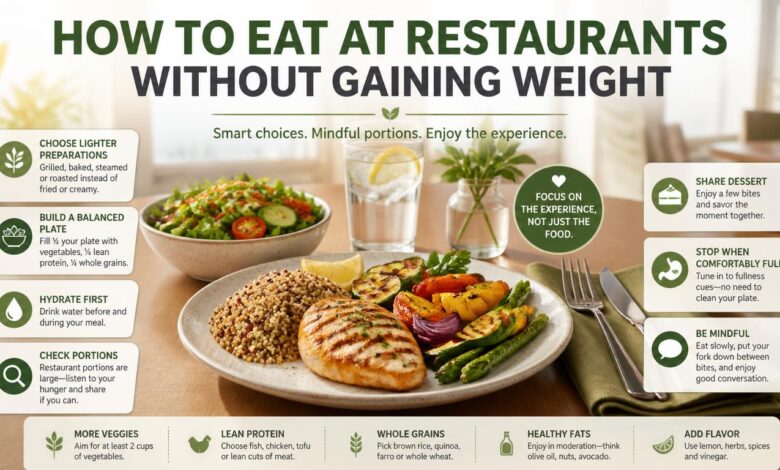
That extreme thinking is exactly what causes yo-yo dieting. You can absolutely enjoy a Saturday night dinner with friends, eat delicious food, and wake up on Sunday without a massive spike on the scale. Learning how to eat at restaurants without gaining weight is a skill. It requires a few specific boundaries before you leave the house and a basic understanding of how restaurant menus are coded. Below, I share the exact four rules I use to handle social dinners without anxiety.
Get My Free Restaurant Menu Cheat Sheet
Download my printable guide to decoding sneaky menu words, plus 10 low-calorie drink orders for your next night out.
Rule 1: Never Arrive Starving (The Pre-Dinner Anchor)
The biggest mistake happens before you even look at a menu. Many people skip lunch because they know they are going to a heavy dinner later. This is a biological disaster.
If you walk into a restaurant running on an empty stomach, your rational brain shuts off. The moment the server drops a basket of warm, buttered sourdough bread on the table, your willpower evaporates. You will consume 600 calories of bread and butter before the waiter even takes your drink order.
Always eat a “protein anchor” forty-five minutes before you leave your house. Drink a tall glass of water and eat something with 25 grams of lean protein. A quick whey protein shake, a cup of Greek yogurt, or two hard-boiled eggs will stabilize your blood sugar. You will arrive at the restaurant feeling calm and capable of making logical menu choices instead of ordering everything in sight.


Owala FreeSip Insulated Stainless Steel Water Bottle
Thirst frequently masks itself as intense hunger. I keep this exact bottle in my car and force myself to finish 24 ounces of water on the drive to the restaurant. It physically fills your stomach and stops the bread-basket binge.
Rule 2: Translate the Menu Buzzwords
Restaurants are in the business of making food taste incredible, which usually involves liberal amounts of butter, heavy cream, and deep-frying oils. You have to learn how to read between the lines on the menu.
Watch out for the danger words. Anything labeled “crispy,” “crusted,” “golden,” or “smothered” is almost certainly deep-fried or heavily breaded. Foods described as “glazed” or “sticky” are coated in high-calorie sugar syrups.
Instead, look for the safe words. “Wood-fired,” “roasted,” “grilled,” “steamed,” and “blackened” usually indicate that the kitchen used a dry heat cooking method with minimal added fats. Ask for sauces and dressings on the side. A standard restaurant salad can easily hit 900 calories if the chef tosses it in half a cup of ranch dressing before bringing it to your table.
Amelia’s “One Treat” Rule
You do not have to eat a boring meal, but you do have to choose your priority. If the restaurant is famous for its truffle fries, order the fries and pair them with a lean grilled chicken breast. If you really want a fancy cocktail, skip the heavy potato side dish and get extra vegetables. Pick the one indulgence that will actually make you happy, and keep the rest of the plate clean.
Rule 3: The “To-Go Box” Strategy
Modern restaurant portions are mathematically designed to justify their high prices. A standard dinner plate in America holds enough pasta for two full-grown adults. Because we were taught to clean our plates as children, we often keep eating long after we feel comfortably full.
There is a very simple hack to beat this. When your food arrives, immediately ask the waiter for a to-go box. Take half of your meal and put it in the box before you take your first bite. Out of sight means out of mind. You get to enjoy a completely satisfying restaurant dinner without the bloated food coma afterward, and you already have a delicious lunch ready for tomorrow.

Zenwise Digestive Enzymes with Prebiotics & Probiotics
Even with careful planning, restaurant food is significantly richer and heavier than home cooking. I keep a travel tin of these plant-sourced enzymes in my purse. Taking one right before a heavy restaurant meal dramatically reduces that painful, tight bloating sensation later that night.
Rule 4: Manage the Liquid Calories
Alcohol is the silent assassin of fat loss. A single margarita or a large craft beer can pack 300 calories. More importantly, your body treats alcohol as a toxin. When you drink, your liver completely pauses fat burning to prioritize processing the alcohol out of your system.
You can still enjoy a drink with your friends. Just stick to clear spirits with zero-calorie mixers (like a vodka with club soda and a lime wedge) or a single glass of dry white wine. Apply the “one-for-one” rule: drink one full glass of still or sparkling water for every alcoholic beverage you consume. It slows down your drinking pace and keeps you hydrated throughout the evening.
Get My Free Restaurant Menu Cheat Sheet
Learn exactly what to order at Italian, Mexican, and Steakhouse restaurants without derailing your diet.

Final Word: Let Go of the Guilt
One heavy meal will not make you gain weight, just like one salad will not magically make you lose it. The scale might jump two pounds the morning after a salty restaurant dinner, but that is just temporary water retention from the sodium. It is not actual body fat.
Go out. Order food you actually like. Use these simple boundaries to protect your progress, and most importantly, enjoy the company of the people sitting across the table from you.
Frequently Asked Questions
What is the healthiest cuisine to eat out?
Traditional Japanese and Mediterranean restaurants usually offer the easiest high-protein, low-calorie options. Sashimi, grilled fish, chicken souvlaki, and fresh salads with olive oil are fantastic choices. Avoid heavy sushi rolls packed with spicy mayo and fried tempura crunch.
How do I handle pushy friends who want me to eat more?
Keep it brief and deflect the attention. A simple “I am completely stuffed, but this was delicious” works perfectly. People usually push food out of hospitality, not malice. If they insist, just say you are saving room for coffee later.
Should I fast the next day to make up for a big dinner?
Absolutely not. Punishing yourself with severe fasting only triggers another binge cycle later in the week. Wake up, drink a large glass of water, and immediately return to your normal, balanced meal plan. Consistency beats extreme compensation every single time.

Written by Amelia
Nutritionist & Gym EnthusiastAt 38, I balance gym training with developing practical nutrition breakdowns for everyday life. I focus on moderate energy deficits, wholesome supermarket ingredients, and helping clients build a healthy relationship with food without missing out on social events.
Affiliate Disclosure: This post contains affiliate links to Amazon. As an Amazon Associate, I earn from qualifying purchases. I only recommend wellness tools and supplements that I personally use and keep in my own kitchen.
Get My Free Restaurant Menu Cheat Sheet
A quick PDF guide covering the exact high-protein, low-calorie orders you should ask for at Italian, Mexican, and classic American restaurants.