
Is It Belly Fat or Just Bloat? 4 Simple Ways to Tell (And How to Flatten It)
Distinguishing between digestive bloat vs actual belly fat is essential if you wake up with a flat stomach in the morning, only to look four months pregnant by 7:00 PM. You put on your favorite pair of jeans at 8:00 AM without issue, but after lunch and dinner, the waistband cuts painfully into your abdomen.
Most people mistake this evening fullness for sudden fat gain, spiraling into frustration and slashing their calories down to nothing.
Human fat tissue simply does not accumulate and vanish within a twelve-hour window. What you are experiencing is abdominal wall distension caused by trapped digestive gas, sluggish intestinal transit, or fluid shifts in the gut lining. Understanding what is really happening beneath your abdominal wall stops needless dieting panic and helps you pinpoint the exact food triggers causing the swelling. Below, I break down four simple diagnostic tests and evidence-based ways to calm your digestive tract.
Get Amelia’s Gut Reset & Debloat Blueprint
Download our free printable low-FODMAP swap sheet, 24-hour digestive soothe protocol, and stomach distension tracker straight to your inbox.
The Science of Digestive Bloat vs Actual Belly Fat
Your abdominal wall covers two entirely separate biological compartments: subcutaneous adipose tissue (body fat) and your gastrointestinal tract (stomach and intestines).
Subcutaneous and Visceral Belly Fat: True adipose tissue consists of specialized fat cells (adipocytes) stored beneath the skin and around internal organs. Gaining a single pound of adipose tissue requires consuming roughly 3,500 surplus calories above your metabolic burn over several days or weeks. True body fat feels soft, pliable, and maintains a consistent volume regardless of what you ate two hours ago.
Digestive Bloating and Distension: Bloat is acute, mechanical expansion. When poorly digested carbohydrates (FODMAPs) reach the large intestine, gut bacteria rapidly ferment them, producing carbon dioxide, hydrogen, and methane gas. This gas expansion, combined with fluid drawn into the bowel, forces the abdominal wall to push outward. It feels hard, tight, and fluctuates drastically throughout the day.
→ Period Weight Gain Causes: Why the Scale Jumps 5 Lbs
Explore our foundational weight fluctuation and fluid-tracking breakdowns:

Visual Breakdown: Distinguishing Bloat from Belly Fat
Scroll sideways to watch gastroenterologists and registered dietitians explain how to identify and relieve stomach distension:
Pure Encapsulations Digestive Enzymes Ultra
Broad-spectrum vegetarian enzymes that break down stubborn proteins, cruciferous fibers, and complex carbs before fermentation triggers painful gas and distension.
4 Simple Ways to Tell Bloat from Real Body Fat
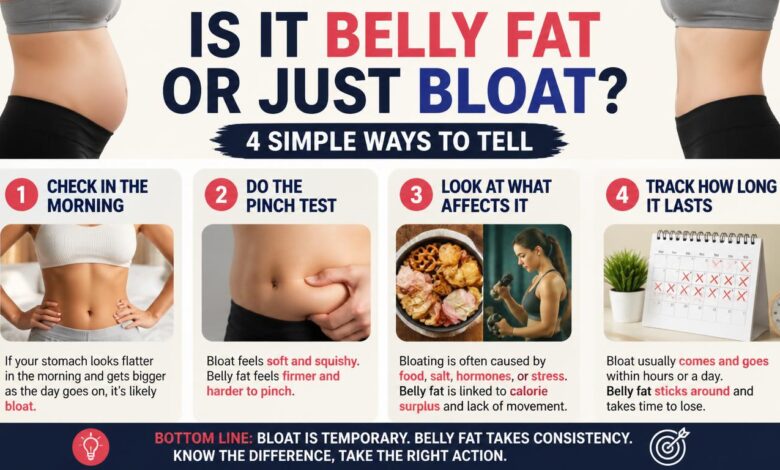
1. The “Morning vs. Evening” Mirror Test
Look at your abdomen upon waking (after using the restroom) and compare it to 8:00 PM:
- If It Is Bloat: Your stomach is visibly flatter in the morning and expands progressively as you eat and drink across the day.
- If It Is Body Fat: Your stomach size and shape remain virtually identical in the morning, afternoon, and evening. Adipose tissue does not deflate overnight while you sleep.
2. The “Firm Balloon” Pinch Test
Gently press two fingers into the area of fullness:
- If It Is Bloat: The abdominal wall feels firm, drum-like, and pressurized from the inside out. You cannot easily pinch or gather the skin between two fingers.
- If It Is Body Fat: The subcutaneous layer is soft, squishy, and easily gathered between your thumb and index finger without pain or internal resistance.
3. The Timeline of Onset
Evaluate how fast the swelling appeared. Did your stomach expand two inches within forty-five minutes of eating a chipotle bowl or a raw vegetable salad? Fat synthesis is biochemically incapable of operating at that speed. Rapid expansion that develops over minutes or hours is 100% gastrointestinal gas, fluid, or delayed stomach emptying.
4. Accompanying Physical Symptoms
Body fat is physiologically silent; it does not produce abdominal sounds, cramping, or digestive discomfort. In contrast, digestive bloat is almost always accompanied by internal gurgling (borborygmi), mild gas pressure, delayed bowel movements, or frequent belching.
Heather’s Tummy Teas Organic Fennel & Ginger Tea
Fennel contains anethole, a natural compound that relaxes smooth intestinal muscles to release trapped gas pockets, while ginger stimulates gastric emptying in under twenty minutes.
Quick Diagnostic Table: Bloat vs. True Body Fat
How to identify what is happening with your abdominal profile at a glance:
| Feature | Digestive Bloat | Subcutaneous Belly Fat |
|---|---|---|
| Fluctuation Speed | Changes hour-to-hour throughout the day | Requires weeks of caloric surplus to change |
| Tactile Feel | Firm, tight, resembles an inflated balloon | Soft, pliable, easy to gather between fingers |
| Morning State | Visibly flatter upon waking | Same size as when going to sleep |
| Physical Sensation | Internal pressure, cramping, gurgling | Completely painless, zero sensation |
Amelia’s 4 Rules to Deflate a Bloated Stomach Fast
If acute digestive distension is making your waistband miserable, follow these four digestive rules:
- Cook Your Vegetables (Ditch Giant Raw Salads): Raw kale, broccoli, and cauliflower contain dense cellulose fibers that demand heavy digestive effort. Steaming, roasting, or puréeing vegetables breaks down cellular walls beforehand, allowing your small intestine to absorb nutrients without bacterial gas fermentation.
- Chew Every Bite Until Liquefied: Rushing meals swallows excess air (aerophagia) and forces large food particles into your stomach without adequate salivary enzymes (amylase). Chewing each bite twenty times cuts swallowed air in half and drastically accelerates gastric emptying.
- Watch Out for Sugar Alcohols in “Diet” Snacks: Protein bars and low-carb keto treats often contain sugar alcohols like maltitol, sorbitol, and xylitol. These compounds resist small intestine absorption and travel straight to your colon, drawing water and creating intense gas within two hours.
- Take a 15-Minute Post-Meal Walk: Physical upright movement gently stimulates peristalsis—the natural muscular contractions of your colon. A relaxed walk helps propel gas pockets through your intestinal bends, preventing painful localized trapped bloat.
Get Amelia’s 3-Day Gut Reset Blueprint
Wholesome easy-to-digest dinner templates, soothing herbal tea infusions, and simple ingredient swap cards to keep your stomach flat all day.

Amelia’s Final Word: Give Your Digestive Tract Grace
It is completely normal for your abdominal profile to expand slightly after digesting three meals and two liters of water across a busy day. Your stomach is not meant to be a frozen, flat board 24 hours a day; it is a functioning internal organ processing energy for your life.
Learn the difference between digestive bloat vs actual belly fat so you stop punishing yourself for basic biology. Cook your veggies, slow down your meals, sip a soothing mug of fennel tea, and let your body digest in peace.
Frequently Asked Questions
Can food intolerance cause sudden abdominal swelling?
Yes. Undiagnosed sensitivities to lactose (dairy sugar), fructans (wheat and onions), or excess fructose can cause rapid intestinal fermentation. If your stomach expands dramatically within 30 to 90 minutes of consuming specific foods, keeping a simple 7-day food and symptom journal can identify the culprit.
How long does it take for digestive bloat to go away?
Acute gas bloat typically resolves within 4 to 12 hours as food moves through the digestive tract. Bloat related to constipation, high sodium, or pre-menstrual hormones may take 24 to 48 hours to clear once hydration and gut motility normalize.
Does drinking carbonated water cause bloating?
Yes. Sparkling water, seltzers, and diet sodas introduce dissolved carbon dioxide gas directly into your stomach. While harmless, that gas must escape through belching or travel down the intestinal tract, creating temporary physical distension.

Written by Amelia
Nutritionist & Gym EnthusiastAt 38, I balance gym training with developing practical nutrition breakdowns for everyday life. I focus on moderate energy deficits, wholesome supermarket ingredients, and sustainable habits that protect long-term metabolic health.
Affiliate Disclosure: As an Amazon Associate, I earn from qualifying purchases. This means that if you click through and make a purchase, I may receive a small commission at no extra cost to you. I only recommend herbal teas, digestive enzymes, and kitchen tools I genuinely use and trust.
Medical Disclaimer: The digestive breakdowns and dietary suggestions provided on this website are for educational and informational purposes only. If you experience severe abdominal pain, persistent vomiting, fever, or unexplained rapid weight loss alongside bloating, consult a gastroenterologist or physician promptly to rule out conditions such as SIBO, celiac disease, or IBD.
Get Your Free Debloat Pocket Sheet
A printable cheat sheet to stick on your fridge: top 10 bloating food culprits, gentle low-FODMAP swaps, and the 15-minute debloat routine.