
Forget the Treadmill: Why 8,000 Daily Steps Torches More Fat Than Hard Cardio
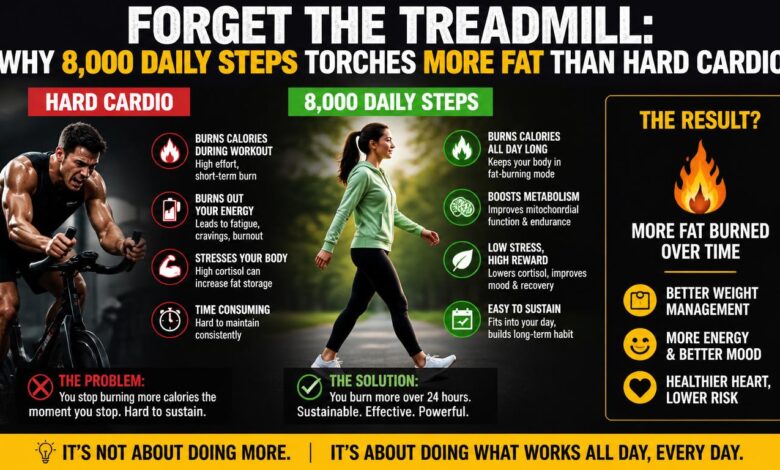
Discovering the true walking for fat loss benefits is the turning point where staying lean transforms from an exhausting battle into a sustainable lifestyle. You drag yourself to the gym at 6:00 AM, grind through forty-five minutes of gasping treadmill running, burn 350 calories, and leave feeling depleted.
Then by 2:00 PM, an uncontrollable biological hunger strikes, driving you to consume 600 calories of snacks that erase your entire morning workout.
High-intensity cardio creates metabolic friction: it spikes adrenal cortisol, increases wear on joints, and triggers severe compensatory appetite. Walking does the complete opposite. It taps almost exclusively into stored free fatty acids for fuel while keeping stress hormones low. Below, I explain the energetics of NEAT, why 8,000 steps beats endless running, and how to fit daily movement into a busy schedule without living at the gym.
Get Amelia’s Daily Step & NEAT Blueprint
Download our free printable 8,000-step routine worksheet, weekly walking habit tracker, and fat-loss calorie balance cards straight to your inbox.
Why Walking for Fat Loss Benefits Beat Traditional Cardio
To understand why brisk daily steps produce better fat loss adherence than running, you must examine how your total daily energy expenditure (TDEE) is divided:
- Basal Metabolic Rate (BMR ~60-70%): Calories burned keeping organs alive at rest.
- Thermic Effect of Food (TEF ~10%): Calories burned digesting protein and fiber.
- Exercise Activity Thermogenesis (EAT ~5%): Formal workouts at the gym.
- Non-Exercise Activity Thermogenesis (NEAT ~15-20%): Pacing, standing, taking stairs, and walking.
A grueling 45-minute spin class only influences that tiny 5% EAT slice. Even worse, strenuous cardio often triggers compensatory inactivity—meaning you feel so exhausted that you spend the remaining fifteen hours of your day lying motionless on the sofa, dropping your overall daily calorie burn.
Targeting walking for fat loss benefits capitalizes on your NEAT pool. Walking 8,000 to 10,000 steps accumulates 350 to 500 calories of clean energy burn throughout your day with zero joint impact and zero appetite rebound.
→ Launch the Free Calorie Calculator
Explore our foundational nutrition blueprints and fat loss tools:


Fitbit Inspire 3 Health & Fitness Tracker
Most people overestimate their daily steps by 3,000. This slim, lightweight tracker has a 10-day battery life, monitoring your daily step floor and active heart rate zones effortlessly.
The Fuel Science: Why Walking Burns Pure Body Fat
Exercise physiology measures what fuel your body uses with the Respiratory Exchange Ratio (RER):
- High-Intensity Cardio (Running, HIIT): The body operates at a high RER (0.9 to 1.0), burning almost exclusively glucose and muscle glycogen. When glycogen is depleted, your brain sends panic hunger signals demanding fast carbohydrates.
- Low-Intensity Steady-State Walking: Walking operates at a low RER (0.7 to 0.75). In Zone 1 to Zone 2 heart rates, oxygen is abundant, allowing your mitochondria to oxidize stored fatty acids directly as primary fuel.
Furthermore, vigorous cardio elevates serum cortisol. In an existing calorie deficit, high cortisol stimulates water retention and down-regulates thyroid conversion. Walking lowers systemic stress, down-regulating cortisol while supporting cellular recovery.

Superfeet GREEN Professional High Arch Support Insoles
Hitting 8,000 to 10,000 steps daily can stress your plantar fascia without proper arch support. These podiatrist-grade orthotics stabilize your heel and keep feet pain-free.
Daily Steps vs. Fat Loss Impact Breakdown
How daily step volumes correlate with metabolic outcomes:
| Daily Step Range | Activity Classification | Est. Burn (Above BMR) | Impact on Appetite |
|---|---|---|---|
| Under 4,500 steps | Sedentary | ~100 kcal | Impaired glucose handling; sluggish |
| 7,500 – 9,000 steps | The “Sweet Spot” | ~350 – 450 kcal | Calm satiety; stable insulin sensitivity |
| 10,000 – 12,000 steps | Highly Active | ~500 – 650 kcal | Moderate appetite increase; high burn |
| 15,000+ steps | Extreme Volume | ~800+ kcal | Substantial fatigue; compensatory hunger |
Amelia’s 3 Rules to Hit 8,000 Steps Without “Going for a Walk”
Do not try to block off 90 consecutive minutes for walking. Instead, break your steps down using habit-stacking:
- The 10-Minute Post-Meal Habit: Take a 10-minute stroll immediately following breakfast, lunch, and dinner. Three short 10-minute walks add approximately 3,600 steps while pulling glucose directly into your leg muscles without insulin spikes.
- Pace During Phone Calls: When talking on the phone or attending audio meetings, stand up and pace your room. A 30-minute business call naturally yields 2,500 effortless steps.
- Park at the Perimeter: Park at the furthest end of the grocery lot, take the stairs instead of elevators, and get off public transit one stop early. These unconscious micro-movements bridge the gap to 8,000 steps without dedicated workout clothes.
Get Amelia’s 30-Day Step Challenge Sheet
A printable habit-building tracker: gradually climb from 5,000 to 8,500 daily steps with micro-walking routines that melt body fat.

Amelia’s Final Word: Consistency Over Intensity
Fat loss is not a test of how much misery you can tolerate on a treadmill. The human body was engineered to walk long distances across the day, not to sit in an office chair for nine hours and then sprint until exhaustion.
Embracing walking for fat loss benefits protects your joints, preserves your metabolic rate, and leaves your energy high. Put on comfortable shoes, step outside into the fresh air, and let steady movement carry you to your goals.
Frequently Asked Questions
Do I need exactly 10,000 steps a day to lose weight?
No. The “10,000 steps” target was originally created as a Japanese marketing campaign for a pedometer in 1965. Modern epidemiological studies show that metabolic and longevity benefits begin leveling off around 7,500 to 8,500 steps daily. Consistency at 8,000 steps beats sporadic 12,000-step days.
Does walking speed or incline matter for fat loss?
A brisk walking pace (approx. 3.0 to 3.5 mph) or adding a slight incline (2% to 4% on a treadmill) elevates calorie expenditure by 30% to 50% without crossing into an anaerobic, cortisol-spiking zone. However, total volume of movement matters more than intensity.
Can walking replace lifting weights for body recomposition?
No. Walking burns calories and improves cardiovascular health, but it does not supply the mechanical tension required to build or preserve muscle tissue during a calorie deficit. Combining 8,000 daily steps with 3 days of resistance training produces the ideal body recomposition outcome.

Written by Amelia
Nutritionist & Gym EnthusiastAt 38, I balance gym training with developing practical nutrition breakdowns for everyday life. I focus on moderate energy deficits, wholesome supermarket ingredients, and sustainable habits that protect long-term metabolic health.
Affiliate Disclosure: As an Amazon Associate, I earn from qualifying purchases. This means that if you click through and make a purchase, I may receive a small commission at no extra cost to you. I only recommend fitness trackers, insoles, and walking gear I personally use and trust.
Medical Disclaimer: The exercise guidelines and metabolic advice provided on this website are for educational and informational purposes only. If you have chronic joint conditions, cardiovascular disease, or severe plantar fasciitis, consult your physician or physical therapist before increasing your daily walking volume.
Get Your Free 8,000 Step Daily Planner
A printable cheat sheet to stick on your fridge: micro-walking habit triggers, post-meal glucose timing, and weekly step-logging cards.