
The “Diet Break” Strategy: How Eating More Can Restart Stalled Fat Loss
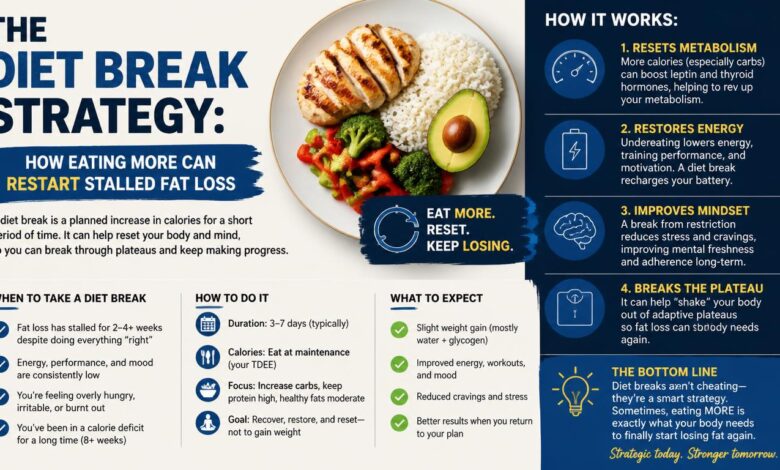
Implementing a planned diet break for fat loss is the single most counterintuitive yet scientifically backed strategy to revive a sluggish metabolism. When your progress hits a stubborn wall after eight to twelve weeks of dieting, every traditional instinct tells you to push harder: slash another 300 calories from your meals, skip evening carbohydrates, or spend forty extra minutes sweating on a stairmaster.
That aggressive reaction is precisely why long-term diets collapse into metabolic burnout and rebound bingeing.
Your body is an adaptive survival engine. When it perceives continuous food restriction, it defends itself by suppressing metabolic expenditure, tanking thyroid output, and elevating stress hormones that hold onto fluid. Taking a structured, one-to-two-week pause at true maintenance calories signals to your brain that starvation has ended. Below, I break down the clinical science behind the MATADOR study, explain why eating more carbs resets your fat-burning hormones, and show you exactly how to execute a diet break without gaining an ounce of fat.
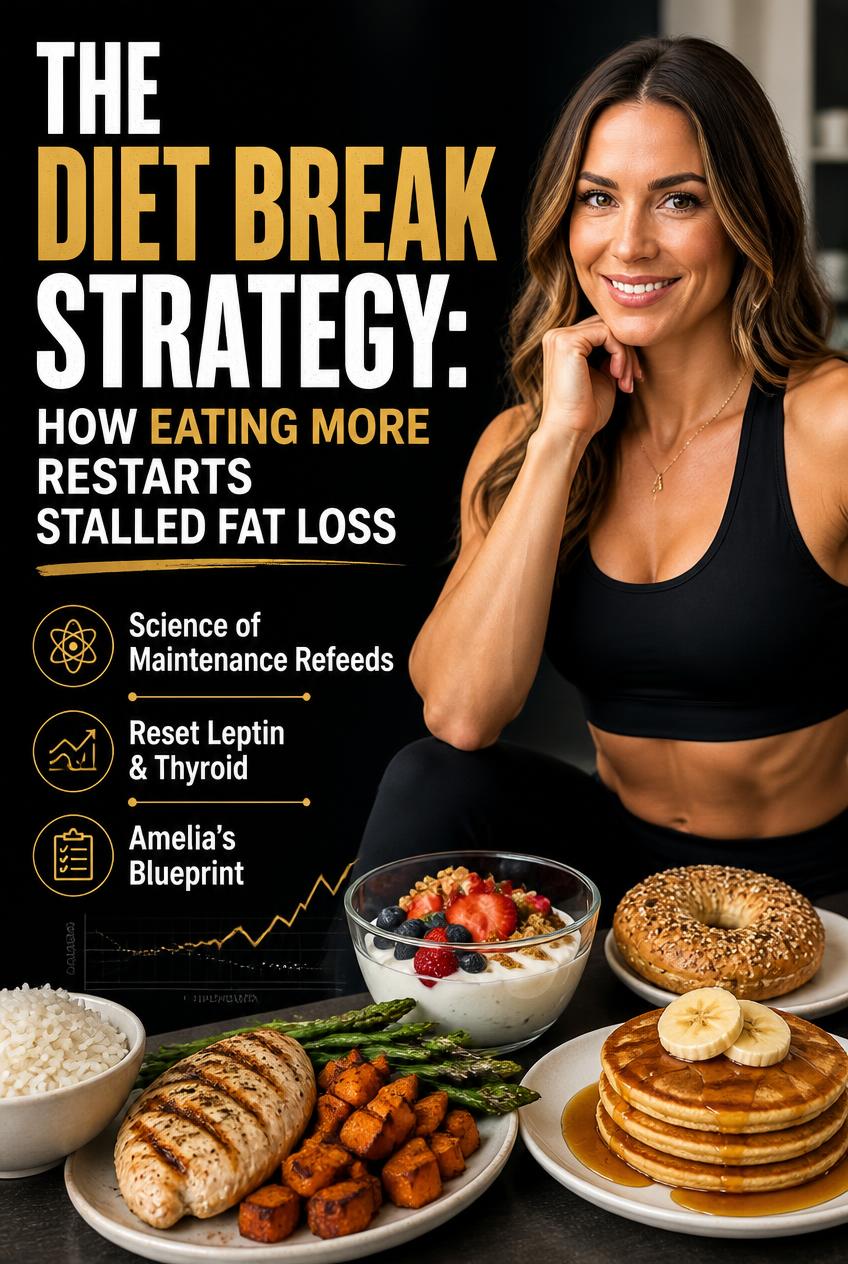
Get Amelia’s Diet Break Protocol Blueprint
Download our free printable maintenance calorie calculator worksheet, 7-day refeed menu templates, and metabolic reset checklist straight to your inbox.
The Science of a Diet Break for Fat Loss: Why Eating More Restarts Burning
Continuous energy restriction triggers a cascade known as adaptive thermogenesis. As you remain in a caloric deficit, your biological systems down-regulate to protect vital survival organs:
- Leptin Collapse: Leptin is the primary hormone produced by fat cells that communicates energy abundance to your hypothalamus. As fat mass decreases and calories drop, leptin plunges, sending urgent starvation signals that spike hunger and reduce subconscious movement.
- Thyroid (T3) & Metabolic Slowdown: Active thyroid hormone (triiodothyronine or T3) controls basal body temperature and cellular burn rate. In a prolonged deficit, the liver converts less T4 into active T3 to conserve fuel.
- Cortisol & Water Masking: The physical stress of dieting elevates adrenal cortisol production. High cortisol stimulates water retention, meaning you might continue losing fat tissue, but systemic fluid retention completely masks progress on your bathroom scale.
A strategic diet break for fat loss temporarily reverses this hormonal suppression. By raising calories back to your current maintenance level for 7 to 14 days, leptin rebounds, active thyroid hormones rise, cortisol drops sharply, and your body flushes liters of stress-related water.
→ Launch the Free Calorie Calculator
Explore our related weight science breakdowns and meal strategies:
Clever Fox Daily Wellness & Macro Habit Planner
A diet break is not a free-for-all cheat week. This undated structure journal keeps your daily maintenance calories, steps, and sleep targets meticulously on track.
What the Clinical Research Proves (The Landmark MATADOR Study)
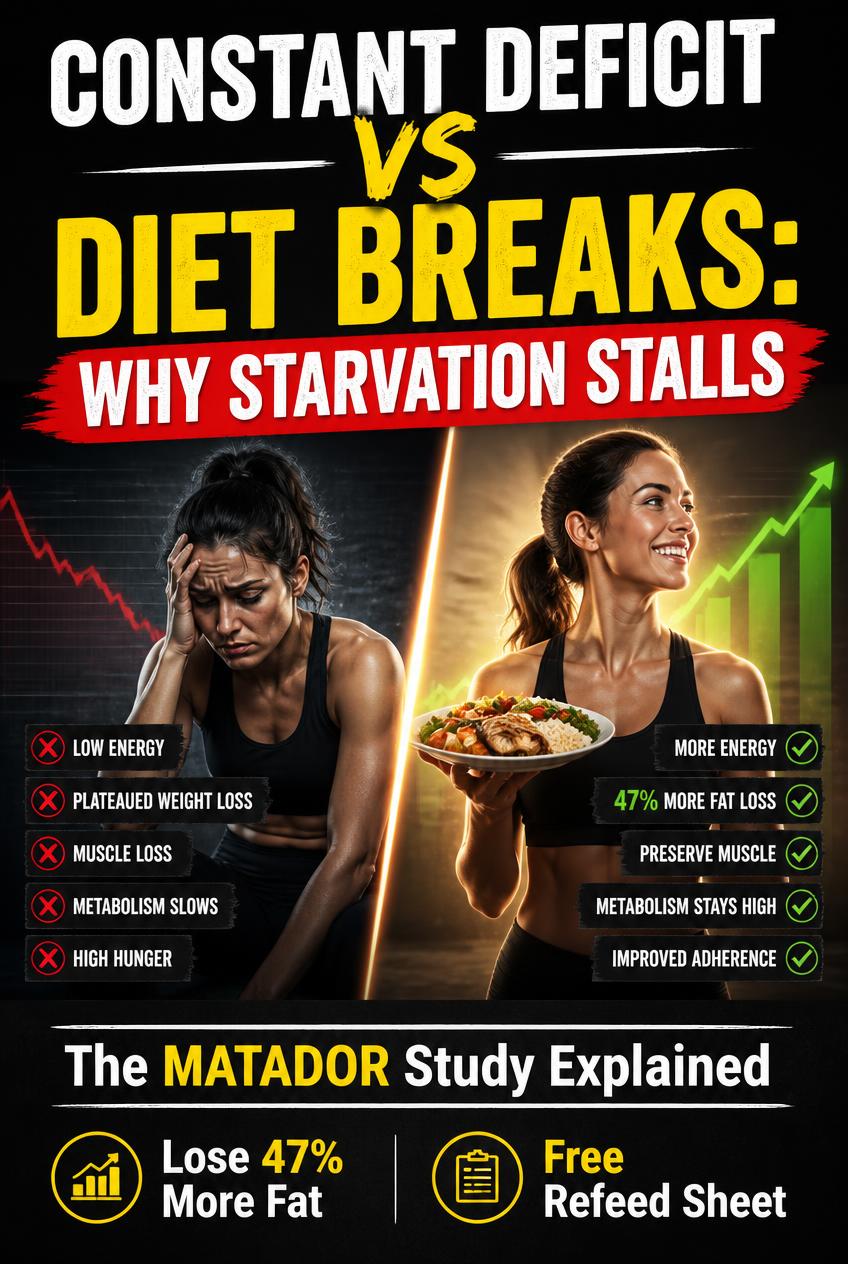
In 2017, clinical researchers published the landmark MATADOR study (Minimising Adaptive Thermogenesis And Deactivating Obesity Rebound) in the International Journal of Obesity.
Researchers took two groups of men with obesity and put them through the exact same total weeks in a 33% calorie deficit:
- Group A (Continuous Restriction): Dieted straight through for 16 weeks without a single break.
- Group B (Intermittent Diet Breaks): Dieted for 2 weeks, followed by 2 weeks of eating at maintenance calories, repeating this pattern until 16 deficit weeks were completed.
The results stunned the nutrition world: Group B lost 47% more total body fat than the continuous group. Even more importantly, six months after the trial ended, the diet break group retained significantly more resting metabolic rate and regained far less weight. Taking structured pauses preserved their metabolic machinery.
Withings Body+ Smart Wi-Fi Body Composition Scale
When raising calories to maintenance, water weight can rise temporarily while fat continues to drop. This Wi-Fi scale tracks body fat percentage and water mass trends over time.
Refeed vs. Diet Break: Which Strategy Do You Need?
Understand the functional difference before adjusting your weekly meal structure:
| Parameter | 24 to 48-Hour Refeed | 1 to 2-Week Diet Break |
|---|---|---|
| Duration | 1 to 2 consecutive days | 7 to 14 consecutive days |
| Primary Goal | Replenish muscle glycogen for heavy lifting | Reverse metabolic adaptation and lower cortisol |
| Hormonal Reset Depth | Transient, acute spike in leptin | Sustained normalization of T3, leptin & ghrelin |
| Best Timing Frequency | Once per week during moderate deficits | Every 8 to 12 weeks of continuous dieting |
Amelia’s 4 Rules to Execute a Diet Break Without Gaining Fat
A diet break is a controlled, calculated nutritional intervention. It is not an unmeasured buffet. Follow these four non-negotiable rules:
- Calculate Your True Current Maintenance: Do not eat at the maintenance calories of your starting weight from three months ago. If you lost 12 pounds, calculate your maintenance based on your current body weight. This typically means adding 350 to 500 calories per day back into your meals.
- Add Calories Exclusively from Clean Carbohydrates: Keep protein steady at 0.8 to 1.0 grams per pound of goal weight, and keep dietary fats low-to-moderate (40 to 60 grams). The extra 350 to 500 calories should come from wholesome starches: sweet potatoes, oats, brown rice, bananas, and sourdough bread. Carbohydrates are the specific macronutrient required to stimulate leptin release and convert T4 into active T3 thyroid hormone; dietary fats do not trigger this metabolic cascade.
- Expect an Immediate 2 to 3-Pound Scale Jump: When you increase carbohydrate intake, your muscle cells store glycogen. Every single gram of stored muscle glycogen binds 3 to 4 grams of water. Gaining two pounds on the scale during week one of maintenance is pure intracellular hydration inside your muscle bellies—it is biologically impossible to gain two pounds of body fat while eating at maintenance energy.
- Keep Training and Step Counts Constant: Do not use a diet break as an excuse to sit on the couch for two weeks. Continue lifting weights with intensity—with full glycogen stores, your strength will surge. Keep your 8,000 to 10,000 daily step floor intact to prevent unnecessary spillover.
Get Amelia’s 14-Day Maintenance Meal Blueprint
Wholesome high-carb, low-fat maintenance recipes designed to stimulate thyroid output and replenish glycogen without fat gain.
Amelia’s Final Word: Fat Loss Is a Marathon, Not a Sprint
The greatest enemy of successful body recomposition is impatience. We live in a culture that glorifies endless dietary suffering, but human biology always wins against forced starvation.
Embracing a diet break for fat loss teaches you the single most valuable skill in sustainable nutrition: how to eat at maintenance calories without anxiety. Once you know how to pause, restore your metabolic health, and resume losing fat with ease, you will never fear weight regain again.
Frequently Asked Questions
How often should you take a diet break?
For individuals with higher starting body fat (over 25% for men, over 32% for women), a diet break every 12 to 16 weeks is usually sufficient. As you get leaner (under 15% for men, under 23% for women), metabolic adaptation accelerates, making a 1-week diet break every 6 to 8 weeks optimal for muscle retention.
Will taking a two-week diet break slow down my fat loss timeline?
While it extends the calendar duration of your dieting phase, research shows it significantly accelerates actual fat loss efficiency. Participants who utilize diet breaks lose more fat, retain more muscle, maintain higher daily activity, and experience vastly lower rates of post-diet weight regain.
Can I eat whatever I want during a diet break?
No. A diet break is not a multi-day binge or a “cheat week.” You should continue tracking your food, keeping your daily intake strictly at your calculated energy maintenance ceiling while sourcing 85% of your food from nutritious whole foods.

Written by Amelia
Nutritionist & Gym EnthusiastAt 38, I balance gym training with developing practical nutrition breakdowns for everyday life. I focus on moderate energy deficits, wholesome supermarket ingredients, and sustainable habits that protect long-term metabolic health.
Affiliate Disclosure: As an Amazon Associate, I earn from qualifying purchases. This means that if you click through and make a purchase, I may receive a small commission at no extra cost to you. I only recommend wellness planners, scales, and nutrition gear I personally test and trust.
Medical Disclaimer: The dietary strategies and metabolic explanations provided on this website are for educational and informational purposes only. If you have clinical metabolic conditions, endocrine disorders, or a history of eating disorders, consult a physician or registered dietitian before altering your caloric intake.
Get Your Free Diet Break Cheat Sheet
A printable pocket worksheet: maintenance calorie formulas, carbohydrate refeed ratios, and rules to restart fat loss without stress.