
Stop Mindless Snacking: 6 Printable Food Diary Trackers That Uncover Hidden Calories
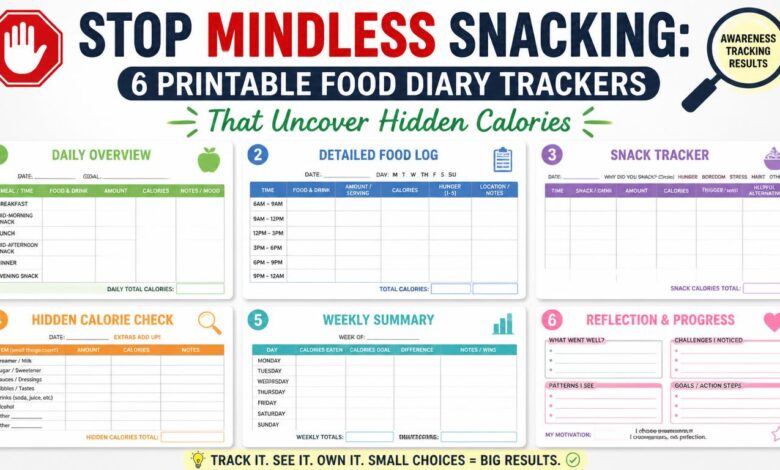
Utilizing dedicated printable food diary trackers for weight loss is the single most eye-opening habit you can adopt to reveal why the scale refuses to move. Most people swear they eat 1,400 calories a day, yet clinical metabolic chamber studies repeatedly show that individuals unintentionally under-report their daily food intake by 30% to 50%.
That gap is rarely intentional dishonesty; it is the blind spot of unconscious mindless grazing.
The splash of heavy coffee creamer, two bites of cheese while cooking dinner, finishing your child’s leftover toast, and the handful of almonds eaten at your desk do not feel like meals, so your memory erases them. A physical daily food diary creates an immediate neurological pause between your craving and your mouth. Below, I break down the behavioral science of mindful logging and share six outstanding printable and editable food diaries that restore honest awareness to your plate.
Get Amelia’s 3-Day Calorie Creep Audit Sheet
Download our free printable food trigger tracker, hunger rating scale (1-10), and liquid calorie audit worksheet straight to your inbox.
Why Printable Food Diary Trackers for Weight Loss Work Better Than Apps
While digital smartphone apps are convenient for barcode scanning, they frequently introduce friction. Opening an app requires unlocking your phone, navigating notifications, and staring at screens, which often leads to distraction and recording delays.
Writing down meals with pen on physical paper provides three distinct neuro-behavioral advantages:
- Cognitive Accountability: Writing by hand engages the brain’s reticular activating system (RAS). The physical effort of writing “3 chocolate cookies” forces you to consciously evaluate whether the bite is worth recording.
- Connecting Emotion to Digestion: Great food logs do not just track grams; they record your mood before eating, energy ratings, and physical digestive sensations (bloating, fullness, acid reflux).
- Exposing the “Bite, Lick, Taste” Trap: When your food journal rests openly on your kitchen counter, it catches the unmeasured 300 to 400 calories that slip in while preparing meals.
→ Tired of “What’s for Dinner?” 6 Printable Weekly Meal Planners That Stop Chaos
Explore our foundational science and weight fluctuation tools:

Top 6 Printable & Editable Food Diary Trackers
1. Meal Planner, Food Diary Canva KDP
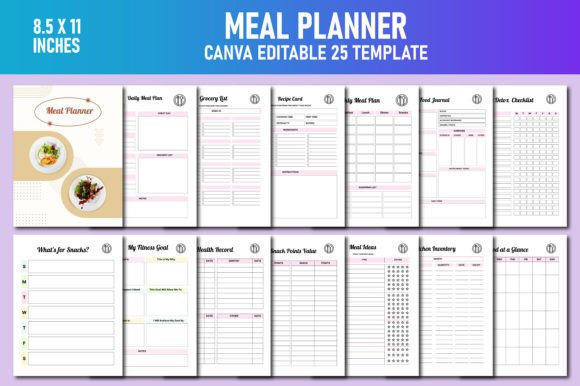
A high-resolution, print-ready interior package available with an editable Canva link alongside ready-to-print PDF, JPG, and PNG files. Includes structured daily meal entry columns, macro allocation checkboxes, water intake trackers, and dedicated reflection spaces.
A great all-around choice if you want to combine weekly meal scheduling with honest daily food journaling. It prints cleanly on standard letter paper and slots neatly into a three-ring binder for whole-month tracking.
2. My Food Diary Canva Template
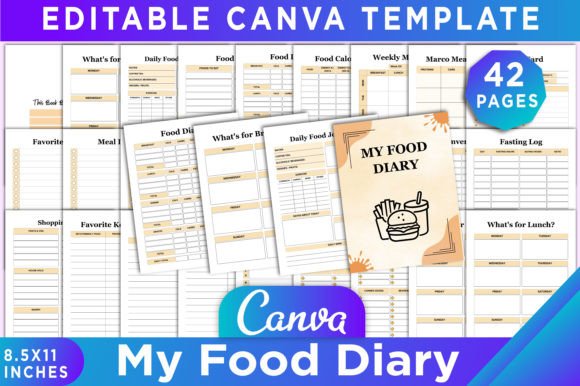
Easily editable using a completely free Canva account. Designed with clean, modern typography and minimalist lines. Provides daily food entry spreads broken down by meal timing, hydration counters, and snack observation boxes.
Recommended for anyone battling late-night pantry raids. The clear timestamps for every meal make it easy to spot 5+ hour hunger gaps between lunch and dinner before cravings take over.
3. Editable My Food & Health Diary Canva
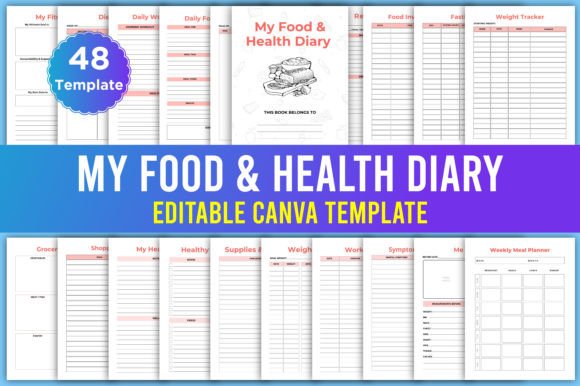
An integrated wellness tracker that pairs nutrition recording directly with health biomarkers. Tracks sleep duration, mood ratings, physical energy curves, and physical symptoms (such as bloating or fatigue) alongside daily food entries.
The top option if you suspect food intolerances, gut distension, or stress eating. Logging what you ate alongside a 2-hour post-meal symptom rating helps quickly uncover trigger foods that cause bloating.
4. My Food Diary Canva KDP Interior
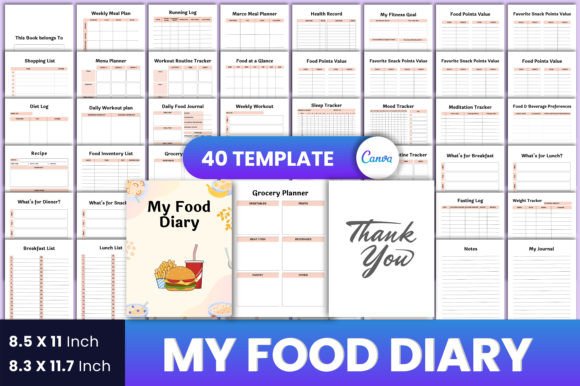
A comprehensive multi-page journal interior ready for KDP or home binding. Includes belongs-to pages, weekly meal overview grids, daily nutritional logging spreads with protein and fiber tracking, and weekly habit review pages.
Best suited for printing out a full 60 or 90-day spiral notebook. The layout keeps your daily protein and dietary fiber targets front and center without visual clutter.
5. Editable My Food Diary Canva Template (Compact Edition)
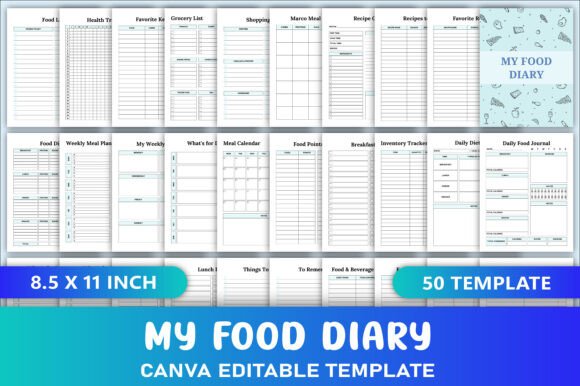
Engineered for rapid daily completion. Focuses on essential data points: breakfast, lunch, dinner, snack items, daily water tally, and total daily calorie estimate. Everything is 100% editable in Canva with print-ready PDF exports.
The ideal choice for busy schedules when you only have two minutes a day to spare. It strips away complicated sub-fields so you can log the basics and get on with your day.
6. Fuel & Flow: Water & Meal Tracker
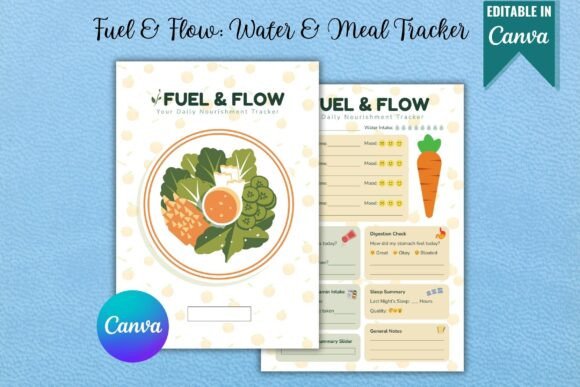
A modern, minimalist single-page printable planner crafted for peak efficiency. Features dedicated water tracking rings, clean meal logging segments, and intuitive daily productivity notes to keep planning simple and rewarding.
Perfect for importing into iPad apps like GoodNotes or keeping as a clean single sheet on your work desk. The modern minimalist styling is motivating without feeling like medical homework.
Feature Comparison Matrix
How these top six food diary trackers compare across tracking depth and formats:
| Tracker Title | Format | Water Tracker? | Symptom / Health Fields? | Primary Strength |
|---|---|---|---|---|
| Food Diary Canva KDP | PDF / Canva Link | Yes | Basic | Ring binder printing |
| My Food Diary Canva | Canva Editable | Yes | No | Meal timing awareness |
| Food & Health Diary | Multi-Spread PDF | Yes | Yes (Mood/Energy) | Bloating & digestive tracking |
| KDP Interior Multi-Page | Full Workbook PDF | Yes | Moderate | 90-day transformation log |
| Compact Daily Diary | Canva / PDF | Yes | No | 2-minute daily speed |
| Fuel & Flow Minimalist | Single-Page PDF | Yes (Rings) | Productivity | iPad & desktop aesthetic |
Amelia’s 3 Rules for Honest Food Journaling
Keeping a food diary only works if the data is accurate. Follow these three non-negotiable rules:
- Log in Real-Time (Never Rely on Memory at Bedtime): If you wait until 10:00 PM to record your food from memory, you will forget roughly 30% of the snacks, sauces, and drinks you had. Keep your printed sheet on your desk or kitchen island and write down what you eat immediately.
- Include the “Invisible” Calories: Always log cooking oils, salad dressings, coffee creamers, and alcoholic beverages. That tablespoon of olive oil used to coat roasted vegetables adds 120 untracked calories that can completely erase your daily deficit.
- Track Without Judgment or Guilt: A food diary is not an emotional report card; it is objective scientific data. If you eat a donut, write down “1 glazed donut” neutrally. When you remove shame from logging, you gain the clarity needed to make adjustments without giving up.
Get Amelia’s 7-Day Mindful Eating Worksheet
Learn how to distinguish true physical hunger from stress-driven cravings with our printable hunger rating scale.

Amelia’s Final Word: Awareness Always Precedes Change
You cannot change what you do not measure. Using printable food diary trackers for weight loss is not about obsessive micromanagement; it is about building compassionate self-awareness.
Pick a template that resonates with you, keep a pen beside it on your kitchen counter, and commit to tracking for just seven honest days. The clarity you gain will transform your nutritional choices forever.
Frequently Asked Questions
Do I need to weigh all my food to use a paper food diary?
For the first two weeks, using a digital kitchen scale to measure calorie-dense items (like peanut butter, cooking oils, cheese, and meats) is extremely beneficial. Once you become familiar with what realistic 30g protein and 100-calorie portions look like, you can transition to intuitive hand-portion estimates.
Can I edit these templates in Canva with a free account?
Yes. All Canva links provided with these templates are designed with standard free design assets. You can easily adjust colors, fonts, or headers using any free Canva account without paying for Canva Pro.
How long should I keep a food diary?
Most clients find that 4 to 8 weeks of consistent food journaling is enough to permanently reset their awareness of portion sizes, emotional snacking habits, and hidden calories. Once your habits are dialed in, you can use the diary as a periodic reset tool whenever progress stalls.

Written by Amelia
Nutritionist & Gym EnthusiastAt 38, I balance gym training with developing practical nutrition breakdowns for everyday life. I focus on moderate energy deficits, wholesome supermarket ingredients, and sustainable habits that protect long-term metabolic health.
Affiliate Disclosure: This post contains affiliate links to Creative Fabrica. If you click through and purchase a template or subscription, I may receive a small commission at no extra cost to you. I only recommend design templates and organizational tools that meet our high nutritional usability standards.
Get Your Free Printable Daily Food Log
A printable single-page food journal: daily meal boxes, hunger ratings, liquid calorie checkboxes, and protein tally rings.