How to Choose a City Bike?
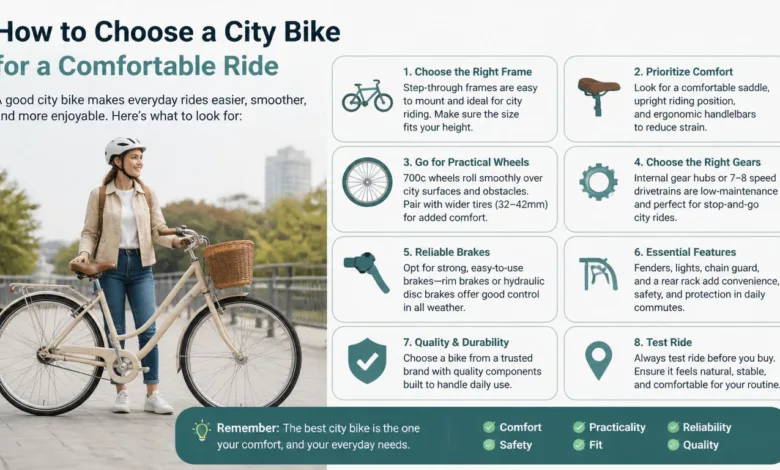
Pedal Your Way to Better Circulation in Your Legs — and a Happier, Healthier Life
Why Your Bike Choice Is Actually a Health Decision
Let’s get one thing straight right away — buying a city bike is NOT the same as buying a pair of sneakers. Sure, both get you moving, but the bike you choose has a direct impact on your body mechanics, posture, joint stress, and yes — Circulation in Your Legs. So before you click “buy” on the first shiny commuter bike you see online, let’s talk about what’s really at stake.
Think about it: the average city dweller spends 6–8 hours a day sitting. DVT (Deep Vein Thrombosis), varicose veins, swollen ankles, and general sluggishness — these are the ugly side effects of a sedentary lifestyle. Cycling, on the other hand, is one of the best low-impact activities for pumping blood through your lower extremities. But only if your bike is set up correctly and matched to your body type. A bad fit? That’s like putting the wrong fuel in a high-performance engine — things will sputter out fast.
The Big Picture: What Is a City Bike, Really?
A city bike (a.k.a. urban bike, commuter bike, or town bike) is specifically designed for paved roads, short-to-medium distances, and everyday practicality. We’re not talking about mountain bikes with suspension forks thicker than your arm, or racing road bikes that force you to hunch over like you’re dodging wind in the Tour de France.
City bikes strike a balance — upright riding position, durable build, practical accessories (think fenders, lights, racks), and manageable weight. They’re built for the real world: potholes, traffic lights, grocery runs, and coffee shop pit stops. In short, they’re the unsung heroes of urban mobility.
Frame Style: The Foundation of Your Ride
Step-Through vs. Diamond Frame — Which Wins?
Here’s where things get interesting. The step-through frame (traditionally called a “ladies’ frame,” though that label is honestly outdated) has a low crossbar or no crossbar at all. This makes mounting and dismounting a breeze — super useful if you’re wearing work clothes, have knee issues, or simply value convenience.
The diamond frame (the classic triangular structure) offers more rigidity and is generally lighter. It transfers pedaling power more efficiently, which means better leg drive and — you guessed it — improved Circulation in Your Legs over longer rides. For those who want a more athletic feel without going full road-bike, this is often the go-to.
Mixte and Step-Over Variants
Then there’s the mixte frame — a hybrid between the two, with twin lateral tubes running from head tube to rear dropout. It’s elegant, versatile, and increasingly popular with style-conscious urban riders. If you want something that looks great parked outside a café AND performs decently on a 10 km commute, mixte frames deserve a long, hard look.
Gearing: How Many Speeds Do You Actually Need?
Single-Speed Simplicity vs. Multi-Gear Flexibility
Ah, the great gear debate! Single-speed bikes are low-maintenance, lightweight, and practically bulletproof mechanically. They’re perfect for flat cities. But if your commute involves hills — even gentle ones — a single-speed will have your quads burning like you’re in a spin class by the time you hit the office.
Multi-speed bikes (typically 3, 7, or 21 gears for city use) give you the flexibility to adjust effort based on terrain and fatigue. From a circulatory standpoint, this matters enormously. Spinning at a lower resistance in a higher cadence (around 80–90 RPM) is significantly better for venous return — i.e., getting blood back up from your legs to your heart — than grinding in a high gear at low cadence.
Internal Hub vs. Derailleur Gears

Internal gear hubs (like the iconic Shimano Nexus or Alfine systems) are enclosed, weather-resistant, and practically maintenance-free. Derailleur systems offer more range and lighter weight but require more frequent tuning. For the everyday city rider who doesn’t want to be elbow-deep in grease every weekend, internal hubs are worth every extra penny.
Saddle Height and Fit: This Is Non-Negotiable
Okay, listen up — this section might be the most important thing in this entire article. A saddle that’s too low forces your knees to bend excessively at the top of each pedal stroke. That compresses the popliteal artery (the major blood vessel behind your knee) and actively restricts Circulation in Your Legs. Over time? Numbness, cramps, and even long-term joint damage.
The golden rule: when your foot is at the bottom of the pedal stroke, your knee should have a slight bend — roughly 25–35 degrees. Most bike shops will do a basic fit for free, and it’s absolutely worth 15 minutes of your time. A proper fit is the difference between cycling being a joy and it being a slow torture session.
Handlebar Height Matters Too
An upright riding position isn’t just more comfortable — it takes pressure off your lower back and allows your hips to open up, improving blood flow through the femoral arteries. If you’re permanently hunched over low handlebars, you’re working against your own circulatory system. Raise those bars!
Tires: The Unsung Hero of Comfort and Performance
Width, Pressure, and Puncture Resistance
City bike tires typically range from 28mm to 47mm wide. Wider tires run at lower pressure, absorbing road vibrations more effectively — which translates to less physical stress on your joints and connective tissues. Narrower tires roll faster and are better for longer daily distances.
For a classic city commute, a 35–40mm tire is the sweet spot. Look for puncture-resistant models (Schwalbe Marathon is practically legendary in cycling circles) so a flat tire doesn’t derail your morning. Bonus: consistent, smooth pedaling on reliable tires keeps your cadence steady — and a steady cadence keeps blood moving efficiently through those legs.
Brakes: Rim, Disc, or Drum?
Safety First, Always
Rim brakes are lightweight and easy to service. Hydraulic disc brakes offer superior stopping power, especially in wet conditions — a genuine lifesaver in rainy urban environments. Drum brakes (enclosed inside the wheel hub) are largely maintenance-free and work fine in the rain, though they’re heavier and slightly less powerful.
For city riding, you really can’t go wrong with good V-brakes or mechanical disc brakes. Just make sure the brake levers reach your hands comfortably — straining to grip your brakes creates tension up through the arms and shoulders, which eventually tightens the whole kinetic chain, including the muscles and vessels in your legs.
Accessories: Don’t Skip These
Here’s a quick rundown of the accessories that genuinely make a difference:
- Fenders (mudguards): Keep road spray off your clothes and face. Non-negotiable in any climate with occasional rain.
- Rear rack: Perfect for panniers or a basket — distributes load over the rear wheel rather than your back.
- Lights: Front and rear, ideally dynamo-powered so you never run out of battery.
- Bell: Simple, cheap, and way more effective than shouting at pedestrians.
- Lock: A quality D-lock (U-lock) or folding lock. Don’t cheap out here — your bike’s security is worth investing in.
- Comfort saddle or padded shorts: Long commutes without cushioning are… unpleasant. Enough said.
If you’re looking to gear up, check out the Schwinn Network 1.0 Men’s Urban City Bike on Amazon or browse commuter-specific accessories that enhance both safety and comfort on urban rides.
Electric City Bikes (e-Bikes): Worth the Hype?
Pedal-Assist Changes Everything
E-bikes — bicycles with a battery-powered motor that assists your pedaling — have absolutely exploded in popularity, and for good reason. The pedal-assist feature means you can tackle longer distances, steeper hills, and arrive at work sweat-free. But here’s the health twist: studies from the University of Basel and others have shown that e-bike riders actually get meaningful cardiovascular exercise, often MORE total exercise than conventional cyclists, because they’re more willing to use the bike for longer trips.
For older adults, people recovering from injury, or anyone with circulatory concerns, a pedal-assist e-bike can be genuinely life-changing. You control how hard you work, so you keep moving without overexerting yourself. Check out options like the Lectric XP Lite or similar models on Amazon for a solid starting point.
Frequently Asked Questions
Is cycling good for Circulation in Your Legs?
Absolutely! Cycling is one of the most effective low-impact exercises for improving venous circulation. The rhythmic contraction of your calf and thigh muscles acts like a pump, pushing blood upward through the veins back toward the heart. Even 20–30 minutes of moderate cycling daily can significantly reduce the risk of varicose veins, leg swelling, and conditions linked to poor vascular flow.
How often should I ride a city bike for health benefits?
The WHO recommends at least 150 minutes of moderate aerobic activity per week. Replacing just one or two daily car trips with a bike ride can get you there easily. Start with 3–4 rides per week of 20–30 minutes and build from there.
What’s the best city bike for someone with knee problems?
Look for a step-through frame for easy mounting, a saddle at the correct height (see above!), and consider a bike with lower gearing so you can spin easily without straining the joints. E-bikes are also excellent for people with knee concerns since you control the effort level.
How much should I spend on a city bike?
Entry-level commuter bikes start around $300–$500 and are perfectly adequate for flat-terrain urban riding. Mid-range ($600–$1,200) opens up better components, more durable builds, and integrated lighting. Premium city bikes ($1,500+) offer top-tier gearing, e-bike options, and superior longevity. Buy the best you can reasonably afford — a good bike is genuinely an investment in your daily quality of life.
Can city bike riding help with varicose veins?
It can help manage symptoms and slow progression! Regular cycling strengthens the calf muscle pump, which is critical for venous return in the lower limbs. That said, always consult a vascular specialist if you have existing varicose veins or venous insufficiency before starting a new exercise program.
The Final Verdict: Wrapping It All Up
So there you have it — your complete, no-nonsense roadmap to choosing the perfect city bike. Let’s bring it home.
Choosing the right urban bicycle isn’t just a consumer decision — it’s a genuine investment in your health, your mood, your productivity, and your freedom. The right frame size, saddle height, gear system, and tire width work together to make every ride comfortable, efficient, and — crucially — beneficial for Circulation in Your Legs.
In a nutshell: go upright, go comfortable, get the fit right, and ride consistently. Your vascular system will thank you. Your legs will feel lighter. Your commute will stop being a chore and start being the best part of your day.
Whether you go classic steel, sleek aluminum, or full electric, the best city bike is the one you’ll actually ride. So stop overthinking it, get out there, and spin those wheels!