How to Choose a Mountain Bike?
Your Legs Will Thank You Later — Seriously
Let’s get one thing out of the way right now: most people shopping for a mountain bike obsess over suspension travel, frame geometry, and tire knobs. All valid! But here’s what almost nobody considers — how a bike choice directly affects Circulation in Your Legs. And trust me, once you understand that connection, you’ll never look at a bike spec sheet the same way again.
Poor leg circulation isn’t just an old-person’s problem. It affects weekend warriors, desk workers, and even seasoned riders who simply haven’t dialed in their setup. We’re talking about blood pooling, numbness on descents, cramping on climbs, and that “dead leg” feeling halfway through a ride. Sound familiar? Good — because we’re about to fix it.
What Does “Circulation in Your Legs” Actually Mean?
Before we dive into bike specs, let’s do a quick anatomy sidebar — don’t worry, I’ll keep it fun. Circulation, or peripheral blood flow, refers to how efficiently your heart pumps oxygenated blood down to your legs and back up again. Think of it like a highway system: if there’s a bottleneck (tight muscles, poor posture, compressed veins), traffic backs up.
CVD — cardiovascular disease — affects millions globally, and poor leg circulation is often one of its earliest warning signs. But here’s the good news: cycling is one of the most powerful, low-impact ways to improve vascular health in the lower body. The rhythmic pedaling action works as a kind of secondary pump, squeezing the calf muscles (your body’s “second heart,” as sports physiologists call them) and pushing blood back toward the heart. So yeah — the right mountain bike isn’t just a toy. It’s literally a health tool.
Frame Size: The #1 Factor Nobody Gets Right
Okay, let’s start where it matters most — frame size. Riding a bike that’s too big or too small is the single fastest way to wreck your posture, compress your hip flexors, and kill Circulation in Your Legs before you even hit the first climb.
Here’s the deal: when your saddle height is off, your knees are either over-extending or under-extending on every pedal stroke. Over-extension strains the back of the knee and restricts popliteal blood flow (that’s the artery behind your knee, FYI). Under-extension compresses the front of the knee and slows venous return from the lower leg. Neither is fun. A properly sized frame — matched to your inseam and torso length — keeps your leg at roughly 25–35 degrees of bend at the bottom of the pedal stroke. That’s the sweet spot for both power and blood flow.
When shopping in-store or online (check out options like the Trek Marlin 7 on Amazon or similar entry-to-mid-level hardtails), always cross-reference the manufacturer’s size chart with your actual body measurements. Don’t just eyeball it!
Saddle Choice and Position: Small Adjustment, Huge Impact

Here’s something that blows most beginners’ minds — the saddle (that’s bike-speak for “seat”) has an enormous effect on circulation in the legs and the groin area. A saddle that’s too hard, too narrow, or positioned at the wrong tilt can compress the perineal artery and cause temporary numbness in the legs within minutes of riding.
- Choose a saddle with a central cutout or channel — this relieves pressure on soft tissue and keeps blood flowing freely.
- Tilt the nose very slightly downward (1–2 degrees) on technical terrain to reduce forward sliding and hip compression.
- Set saddle height so your heel rests flat on the pedal with a nearly-straight leg — then when you ride with your forefoot on the pedal, you’ll get that ideal 25–35 degree bend.
- Width matters! Your sit bones (ischial tuberosities, if you want to impress someone at a dinner party) should align with the widest part of the saddle. Many bike shops offer free sit-bone measurement tools.
Honestly, spending an extra $30–50 on a quality saddle like the WTB Volt or Ergon SR saddles on Amazon could be one of the best investments you make for long-term leg health.
Suspension Setup: More Than Just Comfort
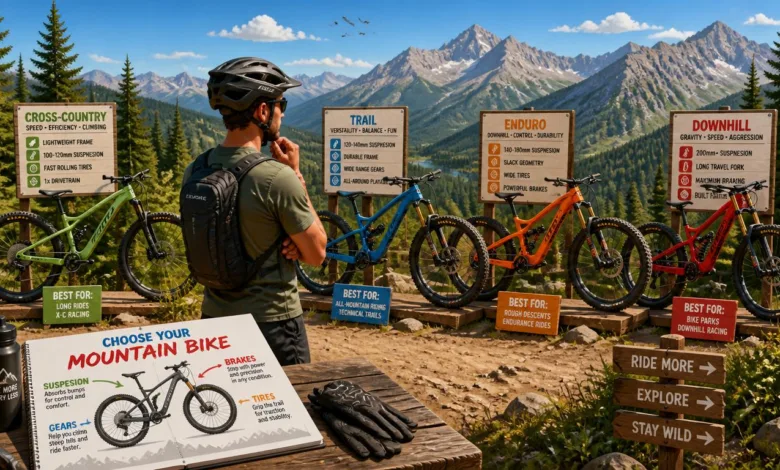
“Wait — suspension affects circulation?” You bet it does. Here’s why. Hardtail vs. full-suspension mountain bikes don’t just change how bumpy your ride feels — they change the muscular tension you hold in your legs throughout a ride.
On a hardtail (front suspension only), your legs absorb more trail chatter, meaning your muscles are constantly micro-contracting to stabilize your body. This is actually great for building leg strength, but over long rides, it can lead to sustained muscle tension that impedes venous return — i.e., blood has a harder time flowing back up from your feet and calves.
Full-suspension bikes absorb that chatter mechanically, allowing your leg muscles to relax more between pedal strokes. For riders who already struggle with poor Circulation in Your Legs — due to sedentary jobs, varicose veins, or recovering from injury — a full-suspension setup can make multi-hour rides significantly more comfortable and health-positive.
If budget is a concern (and hey, full-sus bikes can get expensive fast), look into mid-travel trail bikes in the 120–140mm range. Brands like Specialized, Giant, and Trek all make solid options at various price points. You can browse a wide range at Amazon’s mountain bike section.
Handlebar Height and Reach: Your Posture Is Your Pulse
Here’s an idiom for you: “You ride how you sit.” The position your upper body holds on a bike determines how much your lower body can function freely. Reach too far forward and you’ll round your lower back, tilt your pelvis, and — yep — compress those femoral blood vessels running through your groin.
Ideally, you want a slight forward lean (not a full tuck like a road cyclist, not bolt-upright like grandma’s beach cruiser). Most modern mountain bikes come with a rise in the handlebar and a short stem, which naturally promotes a more upright, relaxed position. This is great news for circulation!
Practical tips for handlebar fit:
- Your elbows should have a soft bend — never locked out.
- Your back should form roughly a 45-degree angle to the ground on flat terrain.
- If you feel tension in your neck or shoulders after 20 minutes, your bars are probably too low or too far away.
- Spacer stacks (those little rings under your stem) can raise bars without buying new parts — cheap fix, big difference.
Pedaling Cadence and Gear Range: The Circulation Catalyst
Okay, here’s where I geek out a little — bear with me. Cadence refers to how many times per minute your legs complete a full pedal revolution (RPM). Most casual riders pedal at around 60–70 RPM. Experienced cyclists aim for 80–100 RPM. Why does this matter for circulation?
Higher cadence = less force per pedal stroke = less muscular compression per stroke = better continuous blood flow through the legs. It’s essentially like the difference between squeezing a garden hose continuously (low cadence, high force) vs. letting water flow freely (high cadence, low force). A wide gear range on your mountain bike — typically achieved through a 1x drivetrain (one chainring up front, 10–12 sprockets in back) — lets you maintain that efficient cadence even on steep climbs or technical terrain.
Look for bikes with at least an 11-speed or 12-speed drivetrain and a wide cassette (something like an 11-50T range). That kind of gear spread means you’re never forced to “mash” through a climb, which is a surefire way to cramp up and stall circulation.
Shoe and Pedal System: The Overlooked Link
Your feet are literally the foundation of your leg’s circulation system. Tight cycling shoes — especially stiff-soled ones — can restrict blood flow to the toes and forefoot within 20–30 minutes. It’s one of the most common complaints among new mountain bikers and, thankfully, one of the easiest to fix.
For mountain biking specifically, you have two main options:
- Flat pedals with grippy shoes: Maximum foot mobility, great for beginners, promotes natural foot movement that helps pump blood through the feet.
- Clipless pedals (SPD-style): More efficient power transfer, but shoes need to fit perfectly — even 1mm too tight creates problems.
If you go the clipless route, look for MTB-specific shoes with a recessed cleat and a sole that’s stiff but not rock-hard. Shimano and Giro make excellent options available on Amazon at reasonable price points.
Ride Duration and Frequency: The Psychological Side
Here’s where my psychologist hat goes on. One of the most underrated factors in improving Circulation in Your Legs through cycling is actually motivation and habit formation — specifically, whether you’ll ride consistently enough to see physiological change.
Research in exercise psychology consistently shows that people who choose bikes they love — visually, emotionally, ergonomically — ride more often. And frequency matters enormously for vascular health. A 30-minute ride three times a week does more for your circulation than one heroic 3-hour slog on the weekend.
So ask yourself honestly: what kind of rider are you, really? Do you love steep, chunky trails or smooth flowy singletrack? A bike that suits your personality and your local terrain is a bike you’ll actually ride. And a bike you’ll actually ride is the best bike for your circulation, full stop!
Frequently Asked Questions
Can mountain biking really improve leg circulation?
Absolutely — and it’s one of the most evidence-backed forms of exercise for vascular health. The combination of rhythmic muscular contractions and cardiovascular demand makes cycling especially effective for improving arterial elasticity and venous return in the legs.
How long should I ride to notice circulation improvements?
Most riders notice reduced leg heaviness and improved energy within 2–4 weeks of consistent riding (3–4x per week, 30–45 minutes per session). More significant vascular adaptations take 8–12 weeks.
Is a full-suspension bike better than a hardtail for circulation?
It depends! Full-suspension reduces sustained muscular tension on rough terrain, which can benefit circulation on long rides. Hardtails build more leg muscle, which long-term actually improves venous return. Both can be excellent — choose based on your terrain and ride duration.
Does saddle type really affect blood flow in the legs?
Yes, significantly. A poorly fitting saddle can compress the perineal and femoral arteries, causing temporary numbness and reduced circulation. A saddle with a central relief channel and correct width for your sit bones is a must.
What’s the best mountain bike for beginners focused on health?
A mid-range hardtail (like the Trek Marlin, Specialized Rockhopper, or Giant Talon) with a 1x drivetrain, a comfortable ergonomic saddle, and flat pedals is an excellent starting point. Explore beginner MTB options on Amazon here.
The Final Word: Ride Smart, Flow Better
So there you have it — a complete guide to choosing a mountain bike through the lens of what actually matters for your body. Frame fit, saddle geometry, suspension design, pedaling dynamics, shoe choice — every single one of these factors plays a role in supporting or undermining Circulation in Your Legs.
The bottom line? A well-fitted mountain bike ridden consistently is one of the most powerful, enjoyable, and sustainable tools for vascular health you can add to your lifestyle. You don’t need a $5,000 carbon rig to get the benefits. You need the right fit, the right setup, and the motivation to get out and pedal.
Start with a bike that fits your body, suits your trails, and excites you every time you look at it. Then ride. Ride often. Ride smart. Your legs — and your heart — will thank you for it.