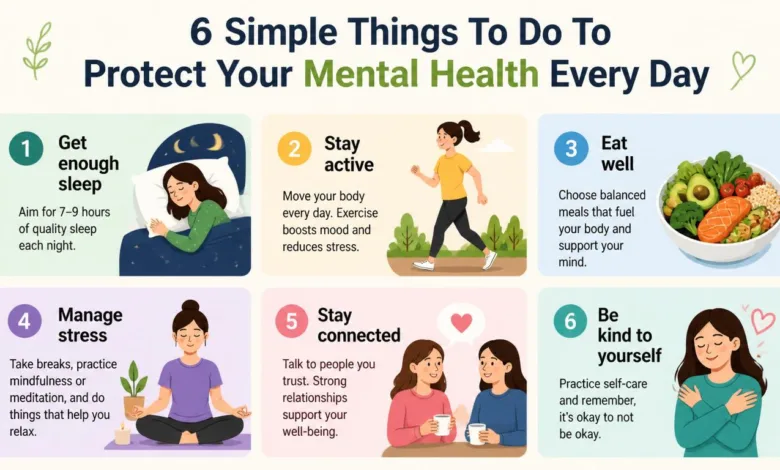
6 Simple Things To Do To Protect Your Mental Health Every Day
Taking care of our mental health is often overlooked in our busy lives, and I can certainly identify with that perspective. For the longest time, I believed that my mental well-being was insignificant. As I focused on fulfilling my daily responsibilities and striving to reach my goals, I pushed aside any concerns about my mental state, thinking I could address it later. I was convinced that hard work and productivity were the ultimate measures of success. However, one day, I reached a point of exhaustion that left me feeling not just physically drained but also mentally and emotionally depleted. I realized I had been neglecting my mental health in favor of other priorities, and this neglect was sapping my joy and vitality.
It took a wake-up call for me to truly recognize the importance of caring for my mental health. I learned that our mental well-being should never be sacrificed on the altar of achievement or responsibility. Nowadays, I understand that nurturing my mental health is essential not only for my overall well-being but also for pursuing my goals and showing up as the best version of myself. We need to remind ourselves that prioritizing mental health is not a sign of laziness or selfishness. It is, rather, an act of self-respect that acknowledges our limits and allows us to create space for healing and restoration. We cannot continuously push ourselves without experiencing serious repercussions. As the saying goes, you can’t pour from an empty cup.
In this article, I’ll share some strategies that have helped me safeguard my mental health daily. I hope these suggestions resonate with you and support your mental wellness too.
1. Embrace Daily Self-Compassion
Are you your own harshest critic? I admit that I often am. I’ve lost count of the times I’ve berated myself over small mistakes, excessively magnifying my imperfections, and feeling defeated by my failures. At the time, I believed that being critical of myself would motivate me to improve. I thought that holding myself accountable through relentless self-judgment would help me avoid failures in the future. But in reality, this behavior only chipped away at my confidence and damaged my mental health. Instead of pushing me to succeed, my criticism became a source of constant anxiety and unhappiness.
Eventually, I learned that genuine progress stems from kindness, not criticism. Practicing self-compassion is one of the healthiest actions we can take to protect and enhance our mental health. We must learn to show kindness to ourselves, particularly during times of failure, mistakes, and setbacks. Acknowledging our humanity means accepting that we are notably imperfect and that we deserve compassion, understanding, and kindness just as much as we offer to others. Remember, you are worthy of the same love and compassion you freely give to those around you.
2. Begin Each Day with Gratitude
To be honest, I was skeptical about the practice of gratitude for a long time. I thought it leaned too heavily toward toxic positivity. It’s easy to feel grateful when life’s going well, but during tough times, finding something to appreciate can seem impossible. I remember when I was experiencing one of the darkest periods of my life; I thought concentrating on my problems was the key to overcoming challenges, not realizing this mindfulness was draining my mental health.
I now believe that starting each day with gratitude can significantly impact your mental health and perspective on life. Expressing gratitude helps shift your focus from negativity to the positive aspects of everyday life, fueling your joy, motivation, and resilience. Practicing gratitude doesn’t mean you ignore your struggles; instead, it acknowledges that joy and sorrow can coexist. Just because things are tough doesn’t mean we can’t create space for gratitude and happiness. Engaging in this practice during rough patches strengthens your mental resilience, reducing feelings of overwhelm and stress.
3. Concentrate on What You Can Control

Are you also someone who feels the need to control every aspect of life? If so, you’re not alone. I’ve grappled with this tendency as well. I spent countless restless nights plotting every possible scenario, convinced that controlling every detail would ensure my life unfolded according to my plans. I mistakenly thought that by managing every facet of my life, I could prevent disappointments for myself and my loved ones.
However, the reality is that many things are simply beyond our influence. The more we struggle to control the uncontrollable, the more stress and anxiety we introduce into our daily lives. Attempting to oversee every aspect only increases our feelings of disappointment when things don’t go as planned. I learned that the best approach is to focus our energy on what we can control while letting go of what we cannot. This shift does not mean abandoning all plans or leaving things to chance; it simply means redirecting our focus to what truly matters. Focusing on what we can control frees up mental and emotional resources to take meaningful action in areas where we can create change.
4. Utilize Deep Breathing Techniques
The power of deep breathing often goes unnoticed. Many times, when I felt overwhelmed by life’s challenges, taking deep, calming breaths served as a lifeline. When problems arise in rapid succession, it’s easy for my mind to spiral into a whirlwind of negative thoughts. During these moments, deep breathing can center me in the present. Focusing on the rhythm of my breath helps ease my racing thoughts and return my mind to a place of calm.
Deep breathing acts as a gentle reminder that it’s okay to take a pause. I don’t need to have all the answers or solve everything immediately. Concentrating on the present moment can significantly enhance my mental health and overall perspective. Therefore, whenever life’s burdens grow heavy and your thoughts become muddled, take a minute to pause, inhale deeply through your nose, and slowly exhale through your mouth. Pay attention to your breath, and let it ground you.
5. Learn to Say No
Overcommitting is something many of us struggle with. Personally, I’ve found it challenging to decline requests, especially from those close to me. Growing up, I was led to believe that my worth depended on my achievements and how useful I could be to others. This belief carried into adulthood, where even when I felt utterly exhausted, I was reluctant to say no for fear of disappointing others and diminishing my self-worth.
Eventually, I had an awakening: constantly saying yes, even when depleted, meant I was neglecting my own needs. I was slowly losing pieces of myself. The emotional toll of continually putting others first began to chip away at my happiness and mental health. If you can relate, remember that your worth is not tied to your productivity or your usefulness to others. You deserve care and respect for your needs. Setting boundaries and saying no is a vital part of taking care of your mental health. It does not equate to being unkind, but rather means you are advocating for yourself and acknowledging your limitations.
6. Spend Time in Nature
In our increasingly digital and home-based lives, it is easy to remain indoors for extended periods, often without realizing the toll it takes on our mental health. Spending too much time inside can lead to feelings of stagnation, disconnection, and depletion. I’ve discovered that a bit of time outdoors can provide the rejuvenation we need to recalibrate.
Whether a short walk or simply enjoying the sun for a few minutes, being in nature can significantly improve our mood and mental clarity. You don’t need to devote hours outside; even a brief escape can bring a refreshing change of scenery, spark creativity, and promote mental well-being. Nature has a unique way of grounding us, and allocating time to be outdoors is an effective tool for enhancing our mental health.
Final Thoughts
Prioritizing mental health is an ongoing commitment, not something we can do for a limited time and then forget. Every day, we must consciously choose to prioritize our mental well-being. Please don’t feel guilty about making this choice; your mental health deserves your attention. It’s crucial to recognize that caring for yourself does not reflect selfishness or weakness—it signifies humanity and self-respect.
Keep in mind that there will be days when you may find it challenging to prioritize your mental well-being. When you face these moments, avoid chastising yourself. Remember that this journey does not demand perfection. What matters is your effort to keep trying. Always remember that you are supported in your endeavors to nurture your mental health, and I am cheering you on as you take these steps.