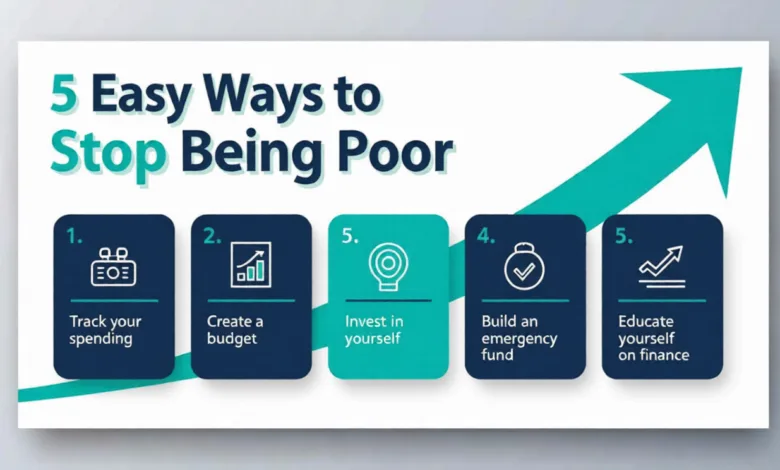
5 Easy Ways to Stop Being Poor
How to Stop Being Poor: 5 Steps to Financial Freedom
Struggling to make ends meet every month can be incredibly stressful. It’s mentally and emotionally draining, especially when you find yourself stuck in a cycle of living paycheck to paycheck. After leaving my office job, I had to confront the consequences of the poor financial choices I had made during my employment. As I searched for a new job, I found myself trapped in a negative spiral, unable even to cover the basic necessities of life. It felt like carrying an enormous burden on my shoulders, leading to a constant feeling of despair.
If you’re feeling trapped in a similar situation, let me assure you: change is possible. You can transform your financial outlook, reduce your debt, and escape the cycle of poverty. You simply need to recognize that you have the power to improve your circumstances. Here are five actionable steps I took to break free and regain control of my finances.
This post contains affiliate links. If you make a purchase through my links, I may earn a small commission at no extra cost to you. I only recommend products I genuinely believe in.
Step 1: Define Your Financial Goals and Create a Plan
The very first step I took toward financial recovery was to define clear financial goals. Despite holding a decent job for several years, I had nothing to show for it in terms of savings or an emergency fund. I was continuously living from paycheck to paycheck because I lacked a clear vision for my finances.
Find Your Purpose
Take the time to sit down and identify what matters most to you. Consider both your short-term and long-term aspirations. Are you looking to save for a house, pay off debt, or establish an emergency fund? Be as specific as possible in outlining these goals. For instance, instead of saying “I want to save money,” specify “I want to save $5,000 for an emergency fund within the next year.”
Prioritize and Set Timelines
Once you have your financial goals outlined, prioritize them and assign deadlines to each one. This helps you stay focused and makes it easier to measure your progress. Having clear goals will provide you with direction, making it less likely that you will fall into the trap of impulsive spending.
Step 2: Learn to Live Below Your Means
With the convenience of credit cards, it’s easy to overspend without realizing it. I was guilty of this for a long time, making poor financial decisions while racking up unnecessary purchases. It was a stressful lifestyle driven by debt and a constant worry over accumulating bills.
Understand Living Below Your Means

To improve your financial situation, learning how to live below your means is essential. This does not mean you have to live a life devoid of enjoyment. Rather, it encourages making wise financial choices. Spend your money strategically on meaningful experiences and essential needs, while avoiding extravagant purchases.
Embrace Financial Wisdom
Living below your means doesn’t equate to being cheap. Instead, it’s about making smarter decisions with your resources. Emphasize quality over quantity when spending and aim to invest in things that truly enrich your life.
Step 3: Break the Convenience Spending Habit
Most people fall into the trap of prioritizing convenience over financial prudence. We’ve all opted for takeout instead of cooking, taken cabs instead of using public transport, or had our groceries delivered for ease. While convenient, these habits can add up quickly and significantly impact your budget.
Assess Your Spending Habits
After taking a hard look at my spending habits, I realized how convenience had drained my finances. The costs may seem minor at first glance but, over time, they accumulate into substantial expenditures.
Make Conscious Choices
Choosing convenience occasionally is fine, but if your objective is to recover financially, it’s crucial to reassess these habits. Start prepping meals in advance, consider using public transport, or shop for groceries yourself to save money. Small changes can lead to significant savings over time.
Step 4: Organize Your Finances
Previously, I didn’t realize how critical financial organization was until I hit rock bottom. Last year was by far my toughest financial period. I was buried under debts, struggling to keep afloat, and my financial disarray only exacerbated my situation.
The Importance of Organization
An organized financial plan creates opportunities for improvement and clearer pathways toward reaching your financial goals. It can be challenging to see where you can save or invest if your finances are chaotic.
Use Tools and Resources
Consider utilizing budgeting tools or finance planners to get yourself organized. These resources can help you track expenses, set budgets, and create long-term strategies for saving. Proper organization gives you a clearer picture of your financial landscape and the steps you need to take towards improvement.
Step 5: Resist the Temptation of Instant Gratification
I used to live for immediate gratification, routinely spending my paycheck on unnecessary items without a second thought. In my mind, I would justify it by saying, “I deserve this.” However, this mindset only led to financial instability.
Shift Your Mindset
Understanding the long-term implications of your spending is crucial. Ask yourself what your ultimate financial goals are and keep them at the forefront of your mind. Remind yourself that small sacrifices today can yield significant rewards in the future.
Emphasize Delayed Gratification
It’s natural to want pleasurable experiences right now, but the key is to find balance. Instead of succumbing to the urge to spend impulsively, focus on what you hope to achieve in the long run. Prioritize saving over immediate satisfaction.
Final Thoughts: You Can Change Your Financial Future
Being broke is undoubtedly challenging. It can lead to sleepless nights and overwhelming stress. But the good news is that this situation is not permanent. It is entirely possible to break free from the cycle of poverty and improve your financial circumstances.
Take Action
Remember, you have the ability to turn things around. By taking action, being consistent, and remaining focused on your goals, you can create a more secure financial future. You’ve got this!
What steps have you taken to improve your finances? I would love to hear your thoughts and experiences in the comments below!