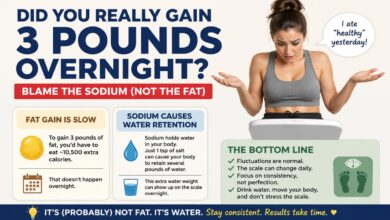

Up 3 Pounds Overnight? Why Your Scale Spiked (And It’s Not Fat)
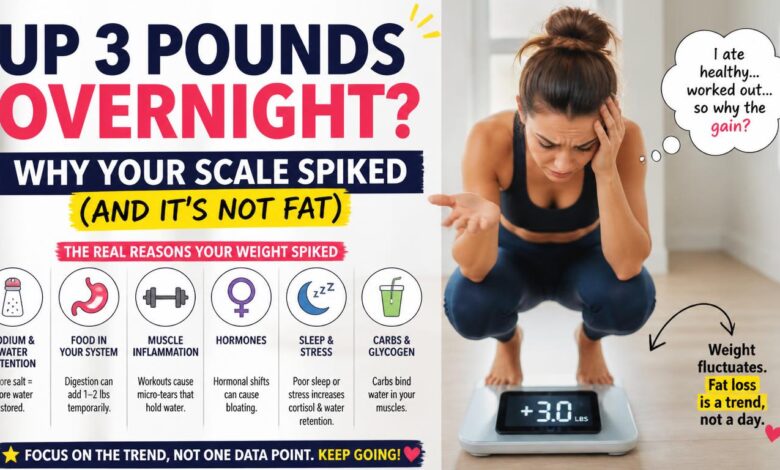
Last Tuesday, one of my clients sent me a frantic morning text: “Amelia, I gained 3.4 pounds overnight. I didn’t even touch dessert. Did I ruin my whole week?” If you find yourself asking why scale weight fluctuates from one morning to the next, you are not alone.
I gave her the exact reminder I share with every client: take a slow breath, step away from the bathroom scale, and stop guessing.
Here is the simple biological reality: You did not gain three pounds of body fat while you were asleep. Storing a single pound of fat requires roughly 3,500 surplus calories above your maintenance level. Gaining three pounds of actual fat overnight would require consuming more than 10,000 extra calories in a few hours. Unless you ate four full pizzas and two family tubs of ice cream at midnight, that sudden morning jump has zero connection to body fat.
Track True Fat Loss Without Scale Frustration
Download our free Weight Fluctuation Cheat Sheet, 7-day progress tracker, and low-sodium meal plan straight to your inbox.
Why Scale Weight Fluctuates: What That Overnight Jump Really Is
A standard digital scale measures one thing only: the gravitational pull of everything inside your body at that exact moment. It cannot differentiate between subcutaneous fat, muscle tissue, water, or the dinner sitting in your digestive tract.
For most adults, body weight naturally shifts by 2 to 5 pounds throughout the day. Once you understand why scale weight fluctuates, the panic disappears. Here are the five primary physiological drivers behind those daily swings.
1. Glycogen Storage: The Invisible Water Sponge
When you eat carbohydrates—potatoes, rice, fruit, bread, or pasta—your body stores that fuel in your liver and skeletal muscle tissue as glycogen.
Glycogen requires hydration to be stored properly. For every 1 gram of glycogen your muscles hold, your body pulls in 3 to 4 grams of water alongside it.
If you enjoyed a balanced pasta dinner or replenished carbs after several low-carb days, your glycogen stores filled right up. Storing an extra 250 grams of carbohydrates pulls roughly 1,000 grams (over 2.2 pounds) of plain water into your muscle cells. Your muscles look fuller, your skin feels slightly tighter, and the scale climbs—all without gaining an ounce of fat.
2. Dietary Sodium and Fluid Balancing
Did you have restaurant takeout, sushi with soy sauce, or canned soup yesterday? Salt is the most common reason the scale spikes overnight.
Your kidneys maintain a tight ratio of electrolytes to fluid in your blood. When dietary sodium spikes, your body temporarily retains fluid to dilute that salt concentration until balance is restored.
- High Sodium Intake: Triggers temporary water retention in extracellular spaces.
- Visible Signs: Rings feel snug, shoes feel tighter, and slight morning facial puffiness appears.
- Duration: Resolves naturally within 24 to 48 hours once you drink plenty of plain water and resume normal eating.
→ Open the Free Calorie Calculator
Pair your calculated target with our practical, high-protein meal templates:
- 1,400 Calorie Plan (gentle deficit for moderate activity)
- 1,500 Calorie Plan (our most popular balanced fat loss baseline)
- 1,800 Calorie Plan (fuel for active gym days)
Visual Breakdown: Why Weight Fluctuates Daily
Scroll sideways to explore visual breakdowns of water weight, glycogen storage, and salt retention:
3. Elevated Cortisol and Broken Sleep
Physical stress and emotional exhaustion alter body composition readings without altering body fat.
Poor sleep or high workplace stress signals your adrenal glands to release elevated amounts of cortisol. Elevated cortisol increases aldosterone, a hormone that directly tells your kidneys to retain sodium and water.
Sleeping fewer than 6 hours creates a double problem: it increases overnight fluid retention while driving up ghrelin (the hunger hormone), prompting cravings for quick sugary foods the next afternoon.
4. Post-Workout Muscle Inflammation (“The Soreness Swell”)
If you lifted weights yesterday or tried a demanding new workout, you might step onto the scale expecting a reward. Instead, the number went up by two pounds.
Lifting weights causes tiny micro-tears in muscle fibers. This microscopic damage is normal and necessary for building strength. However, your immune system treats those micro-tears like any physical injury: it rushes healing fluid and white blood cells directly to the area.
That local inflammation holds onto water. If your legs are sore from squats, they are physically retaining healing fluid. Once muscle recovery finishes 48 hours later, that fluid releases naturally.
5. Physical Food Mass and Digestive Transit
Food has physical weight that is separate from its caloric value.
Consider two different meals:
- A fast-food cheeseburger: 900 calories, but weighs around 250 grams.
- A high-volume salad bowl: 400 calories of grilled chicken, black beans, cucumbers, and cabbage, but weighs over 700 grams.
The high-volume meal is far better for fat loss and fullness, but until your gastrointestinal tract finishes breaking down and eliminating that fiber and bulk, those 700 grams register directly on the scale.
Quick Reference: Common Fluctuation Triggers
Here is what is really happening when your weight jumps between yesterday and today:
| Trigger | Internal Physiological Action | Typical Scale Shift |
|---|---|---|
| Higher Carb Dinner | Glycogen binds 3–4g of water per gram stored | +1.0 to 3.0 lbs |
| Salty Takeout Meal | Kidneys hold fluid to maintain osmotic equilibrium | +1.5 to 4.0 lbs |
| Challenging Leg Day | Micro-tears trigger local inflammatory repair fluid | +1.0 to 2.5 lbs |
| Poor Sleep / Stress | Elevated cortisol prompts aldosterone water hold | +1.0 to 3.0 lbs |
| Delayed Bowel Transit | Uneliminated fiber and digestive bulk in GI tract | +0.5 to 2.0 lbs |
Amelia’s 4 Rules for Stress-Free Weigh-Ins
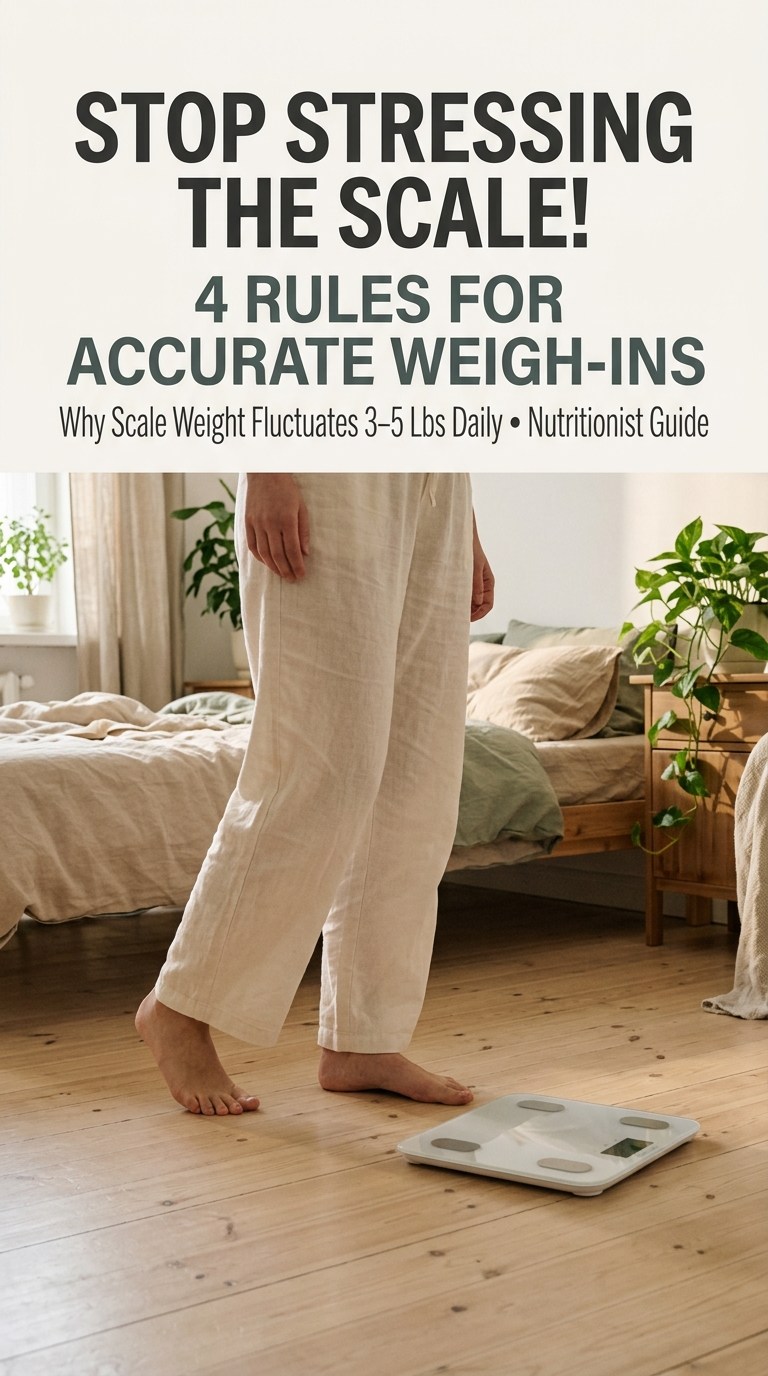
Now that you know why scale weight fluctuates, change how you collect your data to protect your peace of mind:
- Track the 7-Day Average, Never Single Days: If you weigh daily, write the number down without judgment. At the end of the week, add all seven days together and divide by seven. Compare week-over-week rolling averages. That is where true fat loss reveals itself.
- Standardize Your Baseline: Weigh yourself first thing in the morning, barefoot, immediately after using the restroom, and before drinking coffee or water.
- Check Your Flooring: Digital scales placed on carpet, grout lines, or uneven bathroom tiles can swing readings by 2 to 4 pounds instantly. Keep your scale parked on a completely hard, level surface.
- Respect Your Hormonal Cycle: For women, the luteal phase (the 5 to 7 days before your period starts) often introduces 3 to 6 pounds of pure fluid retention due to shifts in progesterone and estrogen. Expect it, record it, and do not let it disrupt your routine.
Get Amelia’s Weekly Meal Prep Blueprint
Wholesome, low-sodium recipes and grocery lists designed to keep morning water retention stable and energy high.
How to Measure Real Progress Without the Scale
True fat loss is quiet and steady. Instead of letting a digital readout dictate your mood, watch these three reliable indicators:
- Clothing Fit: Do your jeans feel looser around your waistband? Are your rings sliding off more easily? Fabric does not lie about volume.
- Waist and Hip Measurements: Measuring your waist circumference once every two weeks with a soft tape measure provides clearer fat loss proof than any morning weigh-in.
- Physical Performance: Are you walking farther with less fatigue? Are your gym weights increasing? When your strength climbs while calories stay moderate, your body composition is improving.
Amelia’s Final Word: The Scale Is Just One Data Point
Do not hand your self-worth over to a bathroom scale. Understanding why scale weight fluctuates reminds us that everyday changes in hydration, digestion, and workouts are completely natural.
When you see a sudden spike, smile, acknowledge the water or the salt, drink a glass of water, and stay consistent with your plan. Consistency over months always wins.
Frequently Asked Questions
Can you gain 3 pounds of actual body fat in one single day?
No. Storing 3 pounds of real adipose tissue requires an energy surplus of approximately 10,500 to 11,000 calories above your maintenance expenditure. An overnight jump is virtually 100% water, stored glycogen, and physical digestive contents.
How long does it take for water weight to go away?
Water retention caused by sodium or high carbohydrate intake typically clears out within 24 to 48 hours once you return to your regular meals and drink adequate fluids. Workout-induced inflammation can take 48 to 72 hours until muscle repair completes.
Should I drink less water to reduce morning scale weight?
Never restrict water. Dehydration causes your kidneys to hold onto fluid more aggressively to protect electrolyte balance. Drinking plenty of fresh water encourages your body to release excess sodium and stored fluids faster.

Written by Amelia
Nutritionist & Gym EnthusiastAt 38, I balance gym training with developing practical nutrition breakdowns for everyday life. I focus on moderate energy deficits, wholesome supermarket ingredients, and sustainable habits that protect long-term metabolic health.
Get Your Free Weight Fluctuation Cheat Sheet
A printable quick-check sheet to keep on your bathroom wall: decode morning scale jumps in 30 seconds and keep your peace of mind.