
Eating Less Than 100g of Protein? Why You’re Losing Muscle, Not Just Fat
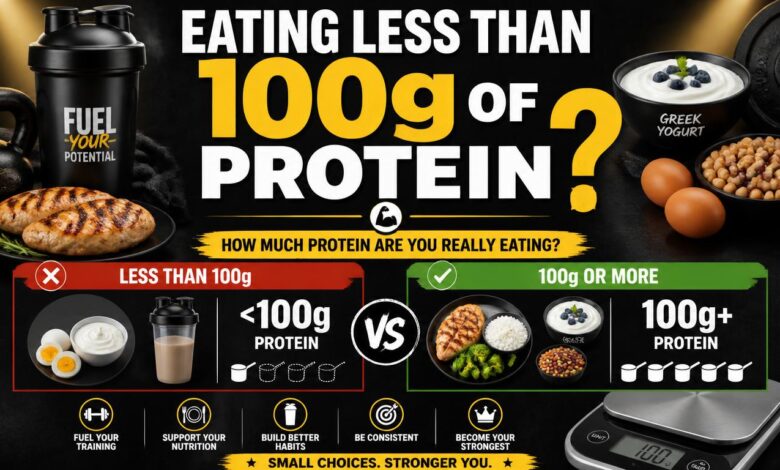
Knowing how to calculate your protein needs for weight loss is what separates shedding pure body fat from losing valuable lean muscle tissue. Most people begin a calorie deficit by cutting food indiscriminately, only to end up looking “skinny fat,” battling endless afternoon fatigue, and fighting ravenous cravings by evening.
When you eat in an energy deficit, your body looks for fuel anywhere it can find it. If you do not supply adequate dietary amino acids, your body breaks down your own skeletal muscle tissue to bridge the gap.
Losing muscle lowers your resting metabolic rate, making long-term maintenance almost impossible. Below, I break down the exact mathematical formulas I use with my clients, explain how to adjust numbers for higher starting body weights, and show you how to distribute your daily protein targets across real meals.
Get Amelia’s Protein Calculation Blueprint
Download the free printable macro formula sheet, daily meal distribution planner, and high-protein grocery list straight to your inbox.
How to Calculate Your Protein Needs for Weight Loss in 3 Steps
Standard government guidelines (RDA) recommend a modest 0.8 grams of protein per kilogram of body weight (about 0.36g per pound). That baseline was developed decades ago simply to prevent clinical malnutrition in sedentary adults—it was never designed to preserve lean muscle inside an active calorie deficit.
To defend your metabolic rate and keep appetite suppressed, clinical sports nutrition points to a substantially higher target.
The Golden Formula for Muscle Retention:
0.7 to 1.0 grams of protein per pound of target body weight
(Or 1.6 to 2.2 grams per kilogram of goal body weight).
Notice the emphasis on target (or goal) body weight. If someone currently weighs 250 pounds with a healthy goal weight of 160 pounds, basing their intake on total current weight would require eating 250 grams of protein daily. That amount is unnecessarily high, difficult to prepare, and crowds out valuable fibrous vegetables and healthy fats.
Basing calculations on 160 pounds of goal weight sets a realistic, highly effective target of 115 to 160 grams of protein daily.
→ Launch the Free Calorie Calculator
Explore our foundational nutrition blueprints and food lists:
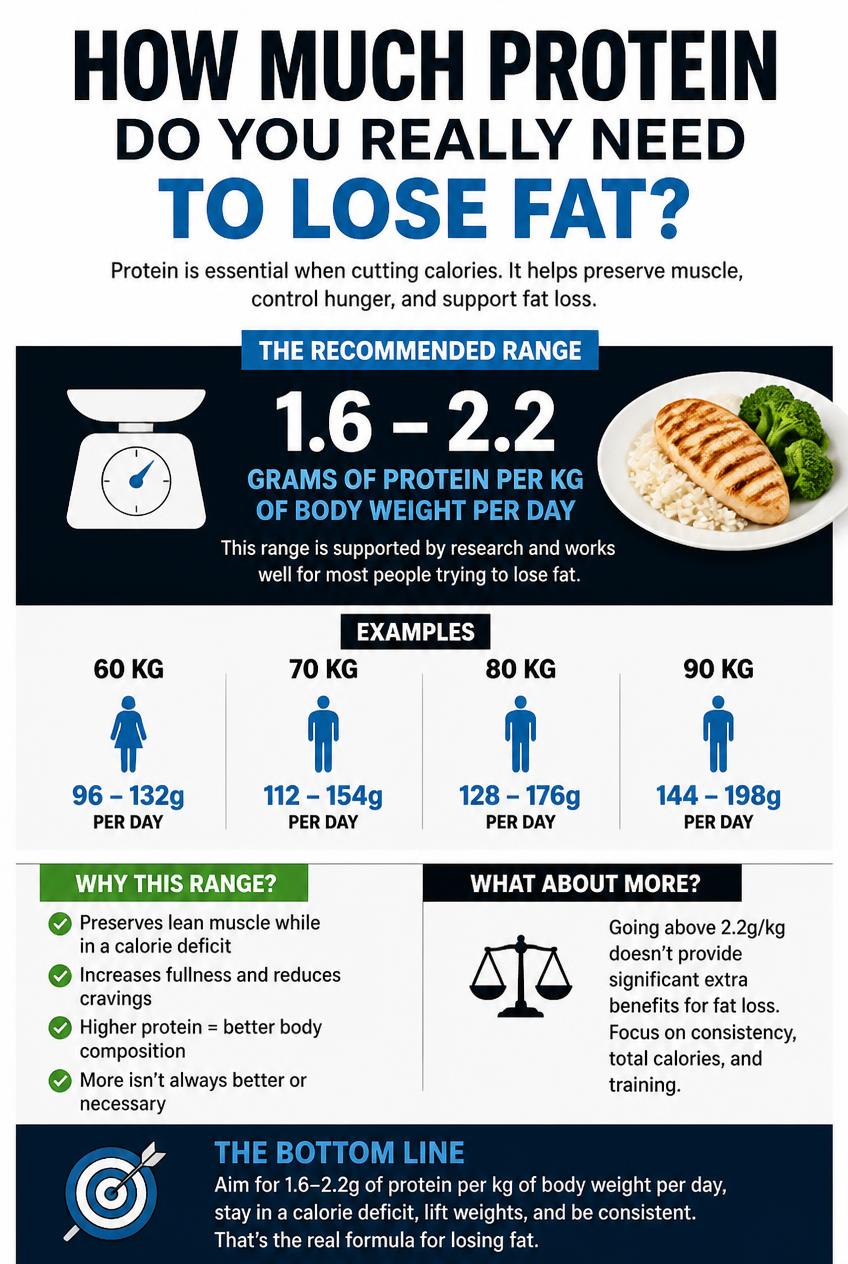
Visual Breakdown: How to Calculate Your Protein Targets
Scroll sideways to watch sports nutritionists break down the math for fat loss and muscle preservation:
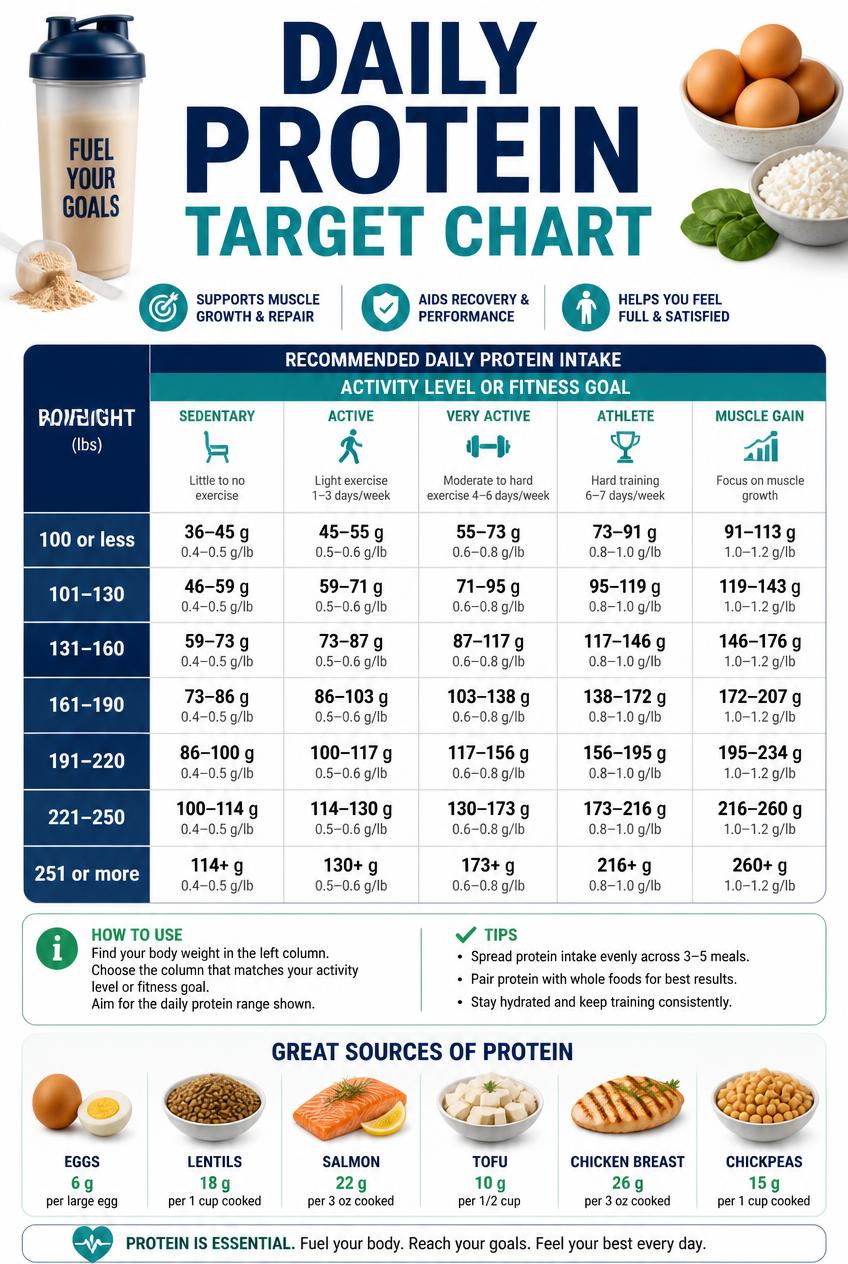
Daily Protein Targets by Body Weight & Activity
Use this reference table to find your target daily intake based on your goal body weight and training routine:
| Goal Body Weight | Sedentary / Light Steps (0.7g/lb) | Moderate Gym Work (0.85g/lb) | Heavy Lifting / Deficit (1.0g/lb) |
|---|---|---|---|
| 125 lbs (57 kg) | 88g protein | 106g protein | 125g protein |
| 140 lbs (64 kg) | 98g protein | 119g protein | 140g protein |
| 160 lbs (73 kg) | 112g protein | 136g protein | 160g protein |
| 180 lbs (82 kg) | 126g protein | 153g protein | 180g protein |
| 200 lbs (91 kg) | 140g protein | 170g protein | 200g protein |
How to Distribute Protein Across Your Day (The Leucine Threshold)
Eating a 10-gram protein bar in the morning and a massive 90-gram steak at 8:00 PM is an inefficient strategy.
To stimulate muscle protein synthesis (MPS), your body needs an adequate concentration of the essential amino acid leucine—typically around 2.5 to 3.0 grams per sitting. This equates to roughly 25 to 35 grams of complete protein per meal.
Here is how to distribute a 120-gram daily target effortlessly across three meals and one snack:
- Breakfast (30g protein): 3/4 cup nonfat Greek yogurt mixed with 1 scoop of whey protein powder and fresh berries.
- Lunch (35g protein): 5 oz grilled chicken breast atop a high-volume greens salad with black beans and light vinaigrette.
- Afternoon Snack (15g protein): 3/4 cup 2% cottage cheese with sliced cucumbers and everything bagel seasoning.
- Dinner (40g protein): 6 oz wild white cod or 93% lean ground turkey stir-fry with broccoli and brown rice.
Get Amelia’s 7-Day High-Protein Meal Plan
Wholesome, easy-prep recipes meeting your 120g–150g daily target with real supermarket ingredients.
Amelia’s Final Word: Consistency Over Perfection
Do not worry if you hit 128 grams on Tuesday and 112 grams on Wednesday. Your body does not reset its biological clock at midnight. What matters for muscle retention is maintaining a steady weekly average.
Pick your target, build every meal around a primary lean protein source first, and let the science of satiety make your fat loss journey sustainable.
Frequently Asked Questions
Can eating too much protein damage healthy kidneys?
Extensive clinical research confirms that high protein intakes (up to 1.2 to 1.5 grams per pound of body weight) do not impair renal function in adults with healthy, undamaged kidneys. Those with pre-existing chronic kidney disease should always follow physician guidance.
Should I calculate protein using total weight or lean mass?
Using goal body weight (or lean body mass if you have had a DEXA scan) is the most accurate approach. It avoids overestimating protein needs for individuals carrying significant excess body fat.
Do protein shakes count toward my daily target?
Yes, high-quality whey, casein, or plant-based protein powders count toward your total. However, aim to source at least 75% of your daily protein from whole foods like poultry, fish, eggs, and dairy to maximize digestive satiety and micronutrient intake.

Written by Amelia
Nutritionist & Gym EnthusiastAt 38, I balance gym training with developing practical nutrition breakdowns for everyday life. I focus on moderate energy deficits, wholesome supermarket ingredients, and sustainable habits that protect long-term metabolic health.
Get Your Free Protein Target Calculator Sheet
A printable worksheet to calculate your exact gram targets, organize your grocery shopping, and hit your numbers effortlessly.