
Low Calorie Vegetables for Weight Loss: 15 Greens That Keep You Full
Whenever clients tell me they feel constant hunger on a calorie deficit, I ask one simple question: “What does half of your dinner plate look like?”
More often than not, the answer is a tiny scoop of canned corn or three lonely florets of broccoli. No wonder their stomach grumbles an hour after eating.
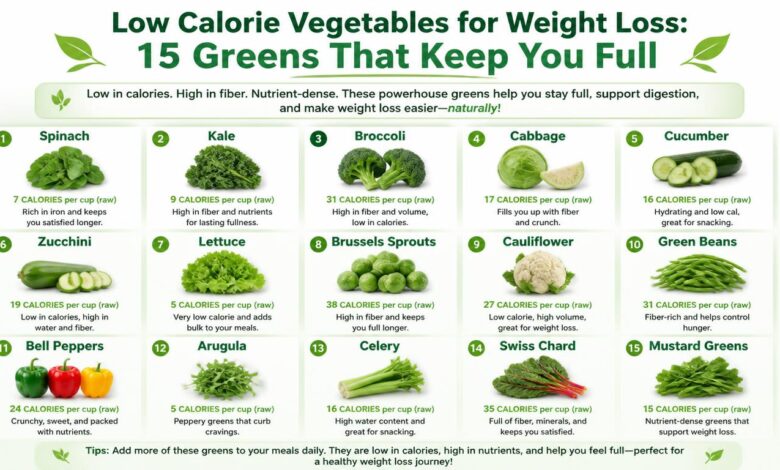
Vegetables are not just a healthy side dish to push around with a fork. They are your greatest fat loss asset. By loading your meals with the right low calorie vegetables, you fill your stomach with water and dietary fiber for almost zero calories. Below are 15 of my favorite nutrient-dense, low-calorie vegetables that keep your appetite quiet, along with simple kitchen tricks to make them taste amazing.
Download the Free Low-Calorie Vegetable Prep Guide
Get our printable vegetable cheat sheet, zero-calorie seasoning guide, and weekly shopping list sent straight to your inbox.
Why Non-Starchy Vegetables Make Fat Loss Effortless
Your stomach registers satisfaction through physical volume, not calorie math.
Consider this fact:
Non-starchy vegetables consist of roughly 90% to 95% water and indigestible fiber. When you eat two cups of roasted zucchini or a large spinach salad, that food physically fills your stomach and activates stretch receptors.
Those receptors signal to your brain that you have eaten a large meal. Here is what happens inside your body:
- Delayed Gastric Emptying: Soluble fiber slows down how fast food leaves your stomach, extending fullness for hours.
- Chewing Fatigue: Crunchy raw or lightly cooked vegetables require active chewing. That physical chewing time signals satiety to your brain before you overeat.
- Gut Microbiome Support: Prebiotic plant fibers nourish beneficial gut bacteria that produce short-chain fatty acids, supporting metabolic health.
- Strict calorie levels: see our 1,200 Calorie Meal Plan and 1,400 Calorie Meal Plan.
- Balanced baseline plans: explore the 1,500 Calorie Meal Plan, our foundational 7-Day Weight Loss Meal Plan, and the Calorie Deficit Meal Plan.
- Pair with protein: browse our recipes for High Protein Dinners, Low Calorie High Protein Meals, and High Volume Low Calorie Foods.
- Active individuals: check our 1,800 Calorie Meal Plan and 2,000 Calorie Meal Plan.
Not sure of your daily calorie targets? Find your numbers using our free calorie calculator.
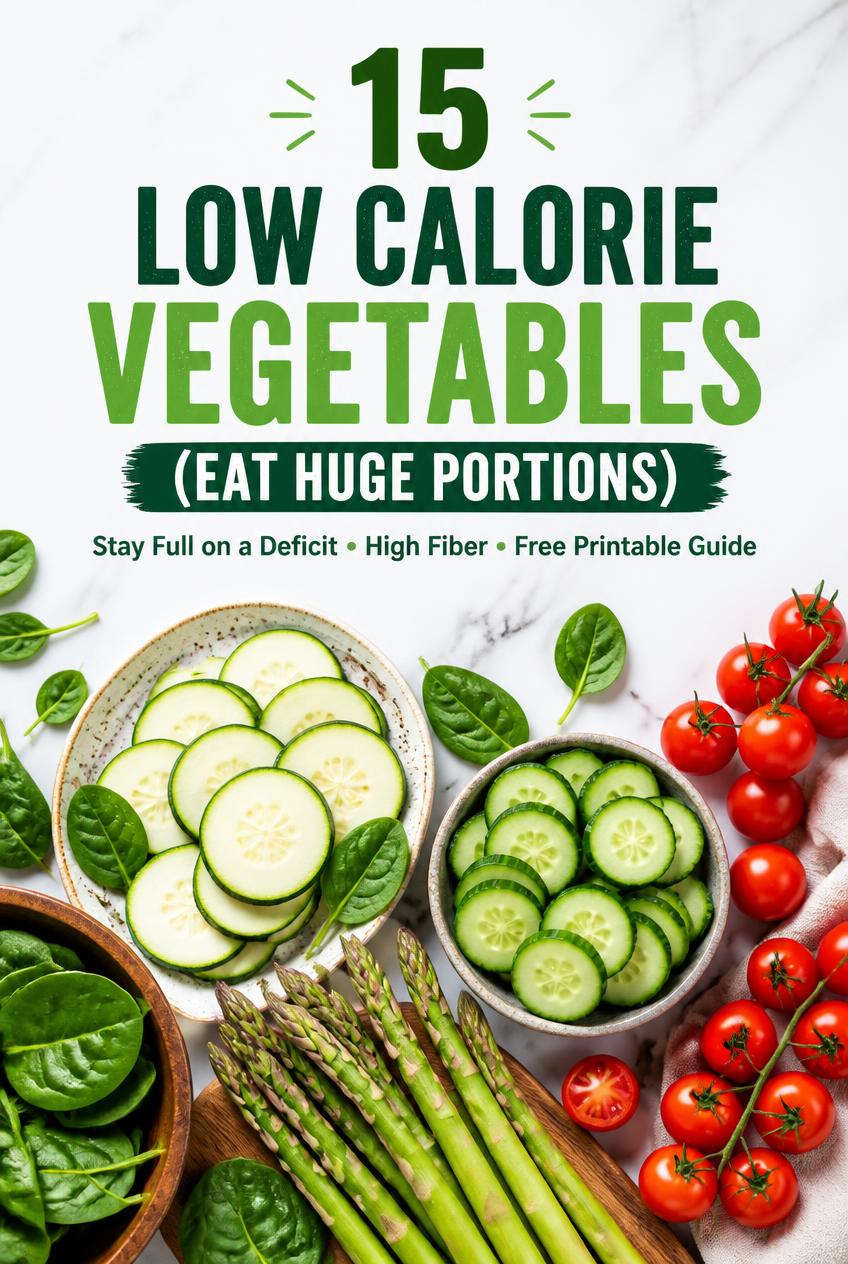
Amelia’s 3 Rules to Make Vegetables Taste Delicious
Nobody sticks to eating vegetables if they taste like wet cardboard. Here is how I turn plain vegetables into flavorful meal centerpieces:
- High-Heat Roasting Beats Boiling: Boiling vegetables leaches out vitamins and makes them mushy. Roasting cauliflower, asparagus, or broccoli at 400°F (200°C) caramelizes their natural sugars and gives them a nutty, rich crunch.
- Acid Is Your Best Friend: A squeeze of fresh lemon juice, a splash of red wine vinegar, or balsamic glaze brightens vegetable flavors without adding cooking oils.
- Keep Seasoning Simple and Bold: Smoked paprika, garlic powder, onion powder, and coarse sea salt turn simple greens into craveable sides for zero calories.
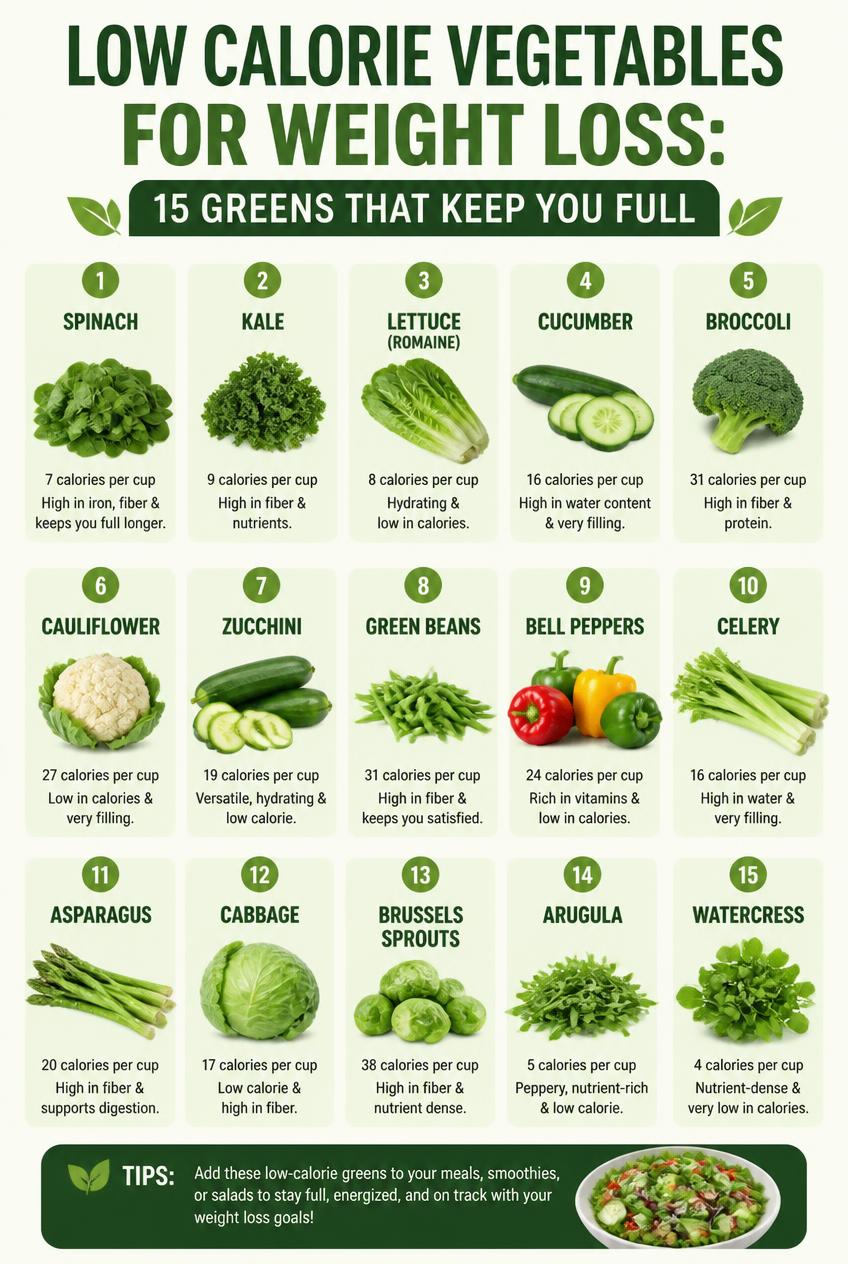
15 Best Low-Calorie Vegetables for Fat Loss
All values are calculated per 100g raw weight using USDA FoodData Central data.
1. Cucumbers (15 calories per 100g)
Over 95% water. Slice them thick for dipping into hummus, or toss with red wine vinegar, dill, and sea salt for an instant high-volume salad.
Nutrients: 0.7g protein | 0.1g fat | 3.6g carbs | 0.5g fiber
2. Celery (14 calories per 100g)
Delivers pure crunch and hydration. Celery ribs paired with low-fat cottage cheese provide substantial chewing time and satisfaction.
Nutrients: 0.7g protein | 0.2g fat | 3g carbs | 1.6g fiber
3. Zucchini (17 calories per 100g)
The ultimate low-carb pasta substitute. Spiralize into zucchini noodles or slice into rounds and grill with garlic powder and oregano.
Nutrients: 1.2g protein | 0.3g fat | 3.1g carbs | 1g fiber
4. Romaine Lettuce (17 calories per 100g)
Sturdier and richer in vitamin A and folate than iceberg. Use large crisp romaine leaves as taco shells or sandwich wraps.
Nutrients: 1.2g protein | 0.3g fat | 3.3g carbs | 2.1g fiber
5. Baby Spinach (23 calories per 100g)
Rich in iron, magnesium, and lutein. Add two huge handfuls to morning egg scrambles or blend into protein shakes without altering the taste.
Nutrients: 2.9g protein | 0.4g fat | 3.6g carbs | 2.2g fiber
6. Asparagus (20 calories per 100g)
Natural prebiotic fiber supports digestion. Roast tender spears with lemon juice and a touch of olive oil spray alongside baked white fish.
Nutrients: 2.2g protein | 0.1g fat | 3.9g carbs | 2.1g fiber
7. White & Cremini Mushrooms (22 calories per 100g)
Meaty, savory, and rich in B vitamins. Sauté them with garlic and herbs to bulk up extra lean ground beef without adding excess calories.
Nutrients: 3.1g protein | 0.3g fat | 3.3g carbs | 1g fiber
8. Cauliflower (25 calories per 100g)
The ultimate chameleon. Pulse in a food processor for cauliflower rice, mash with roasted garlic, or roast florets until deeply browned.
Nutrients: 1.9g protein | 0.3g fat | 5g carbs | 2g fiber
9. Red & Green Cabbage (25 calories per 100g)
Cheap, hearty, and packed with anthocyanins. Shred thinly for crunchy slaw bases or toss into quick weeknight stir-fries.
Nutrients: 1.3g protein | 0.1g fat | 5.8g carbs | 2.5g fiber
10. Radishes (16 calories per 100g)
Peppery and crisp when raw. When roasted in the oven, radishes soften and taste remarkably like roasted baby potatoes.
Nutrients: 0.7g protein | 0.1g fat | 3.4g carbs | 1.6g fiber
11. Bell Peppers (31 calories per 100g)
Delivers more vitamin C than oranges. Cut into wide strips to scoop up salsa, guacamole, or hummus instead of corn chips.
Nutrients: 1g protein | 0.3g fat | 6g carbs | 2.1g fiber
12. Broccoli (34 calories per 100g)
High in sulforaphane, vitamin C, and fiber. Steaming or air-frying broccoli florets provides hearty plate bulk that requires thorough chewing.
Nutrients: 2.8g protein | 0.4g fat | 6.6g carbs | 2.6g fiber
13. Green Beans (31 calories per 100g)
Tender, sweet, and rich in silicon and chlorophyll. Steam with fresh lemon juice and sea salt as an easy side for lean pork tenderloin or chicken.
Nutrients: 1.8g protein | 0.2g fat | 7g carbs | 2.7g fiber
14. Tomatoes (18 calories per 100g)
Packed with lycopene and natural glutamate for umami flavor. Slice onto cottage cheese toast or roast cherry tomatoes with garlic.
Nutrients: 0.9g protein | 0.2g fat | 3.9g carbs | 1.2g fiber
15. Sugar Snap Peas (42 calories per 100g)
Sweet, crisp, and high in vitamin K. Eat raw as an afternoon snack or flash-sauté with ginger and garlic in minutes.
Nutrients: 2.8g protein | 0.2g fat | 7.5g carbs | 2.6g fiber
Print This Vegetable Prep & Shopping Guide
Download the clean printable PDF guide with all 15 low-calorie vegetables, zero-calorie seasoning blends, and shopping list.
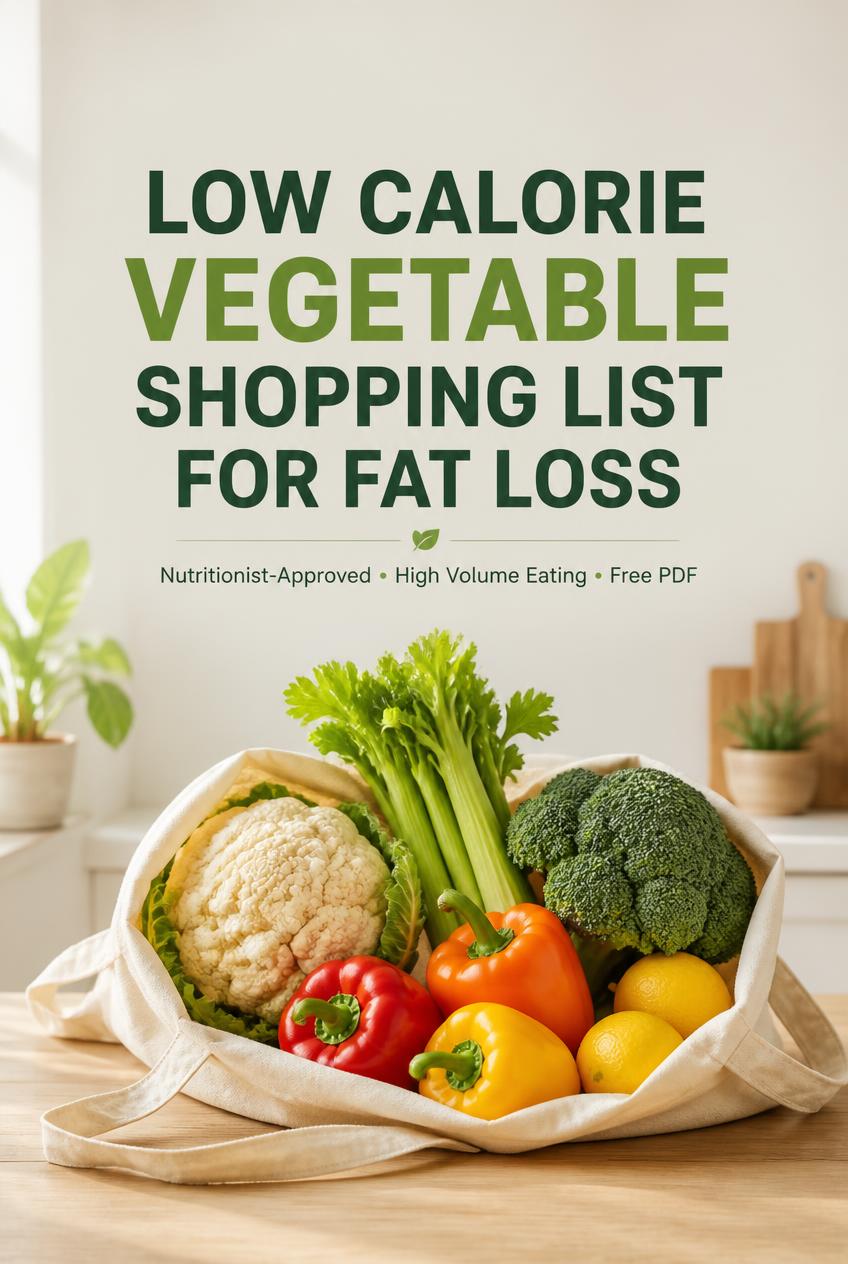
Your Low-Calorie Vegetable Shopping Checklist
Stock these fresh staples weekly to keep meal volume generous and calories in check.
Leafy Greens & Salads
- Baby spinach (large tub)
- Romaine lettuce hearts
- Red and green cabbage heads
- Fresh herbs (dill, cilantro, basil)
Crunchy Produce
- English cucumbers (2-3)
- Celery stalks
- Bell peppers (multi-color pack)
- Fresh radishes & sugar snap peas
- Cherry tomatoes & beefsteak tomatoes
Roasting Vegetables
- Zucchini (4-5 medium)
- Cauliflower heads (or bagged riced)
- Broccoli crowns
- Fresh asparagus spears
- Green beans & cremini mushrooms
Flavor Boosters
- Fresh lemons and limes
- Red wine vinegar & balsamic glaze
- Garlic powder & smoked paprika
- Coarse flaky sea salt & black pepper
- Olive oil spray mister
Amelia’s Final Word: Fill Your Plate and Relax
Eating well does not require leaving the dinner table feeling hungry. When half your plate is piled high with roasted zucchini, crisp cucumbers, and steamed broccoli, you get to eat a hearty portion that feels like a feast.
Add two or three of these low-calorie vegetables to your grocery cart every single week, roast them with simple spices, and enjoy eating large meals that support your fitness goals.
Give your body the hydration and fiber it needs, and let real whole foods do the work.
Frequently Asked Questions
Are raw vegetables better than cooked vegetables for weight loss?
Both have distinct advantages. Raw vegetables require more chewing time and retain heat-sensitive vitamins like vitamin C. Cooking vegetables, however, softens tough cell walls, making antioxidants like lycopene in tomatoes and beta-carotene in carrots easier for your body to absorb. Mix both styles into your routine.
Do I need to count calories in leafy greens?
In practical day-to-day eating, you do not need to track spinach, romaine lettuce, or celery. Their calorie counts are so low that the metabolic cost of digestion offsets much of the energy they provide. Focus your tracking on cooking oils, salad dressings, and calorie-dense sauces instead.
Are starchy vegetables like potatoes bad for fat loss?
Not at all. Potatoes and sweet potatoes score exceptionally high on the satiety index. However, because they are more calorie-dense than non-starchy vegetables, treat them as your meal’s carbohydrate portion (measuring around 1/2 to 1 cup) rather than an unlimited volume filler.

Written by Amelia
Nutritionist & Gym EnthusiastAt 38, I design practical nutrition routines that fuel active lifestyles and make healthy eating accessible. I focus on whole-food plant volume and lean protein strategies that keep hunger low and support long-term metabolic vitality.
Get Your Free Vegetable Cheat Sheet PDF
Receive the full 15 low-calorie vegetable reference cards, seasoning guides, and printable grocery checklist delivered straight to your inbox.