
Always Tired and Hungry? 7 Subtle Signs of Protein Deficiency You Might Be Ignoring
Recognizing the early signs of protein deficiency is essential if you want to protect your metabolic rate, keep your hair healthy, and prevent constant energy crashes while losing weight. Many people assume severe protein shortages only happen in developing countries or under extreme starvation diets.
In reality, marginal sub-clinical deficiency is surprisingly common in modern diets.
When clients tell me they cannot stop thinking about sugary snacks at 3:00 PM, notice their nails snapping easily, or feel sore for four days after a mild workout, their issue is rarely a lack of willpower. It is biological signaling. Protein supplies the amino acid building blocks for neurotransmitters, skin collagen, muscle fibers, and immune antibodies. Below, I break down seven subtle red flags your body sends when dietary protein drops too low, alongside simple ways to fix it without stress.
Get Amelia’s Daily Protein Audit Checklist
Download our free printable protein deficit assessment, whole-food quick fixes chart, and 7-day high-protein meal template straight to your inbox.
Why Signs of Protein Deficiency Show Up Early in Daily Life
Unlike carbohydrates (which get stored in your liver and muscles as glycogen) or fats (which get stored in adipose tissue), your body maintains no passive reservoir for amino acids.
Your body relies on a dynamic, 24-hour amino acid pool. When you fail to provide sufficient dietary protein across the day, your body is forced to scavenge amino acids from existing structural tissues—starting with your skeletal muscles, skin cells, and hair follicles—to maintain vital heart, brain, and liver operations.
Because your vital organs take strict biological priority, the secondary tissues suffer first, creating noticeable changes in your physical energy, recovery, and appearance.
→ How to Calculate Your Protein Needs for Weight Loss
Explore our foundational nutrition blueprints and recipes:
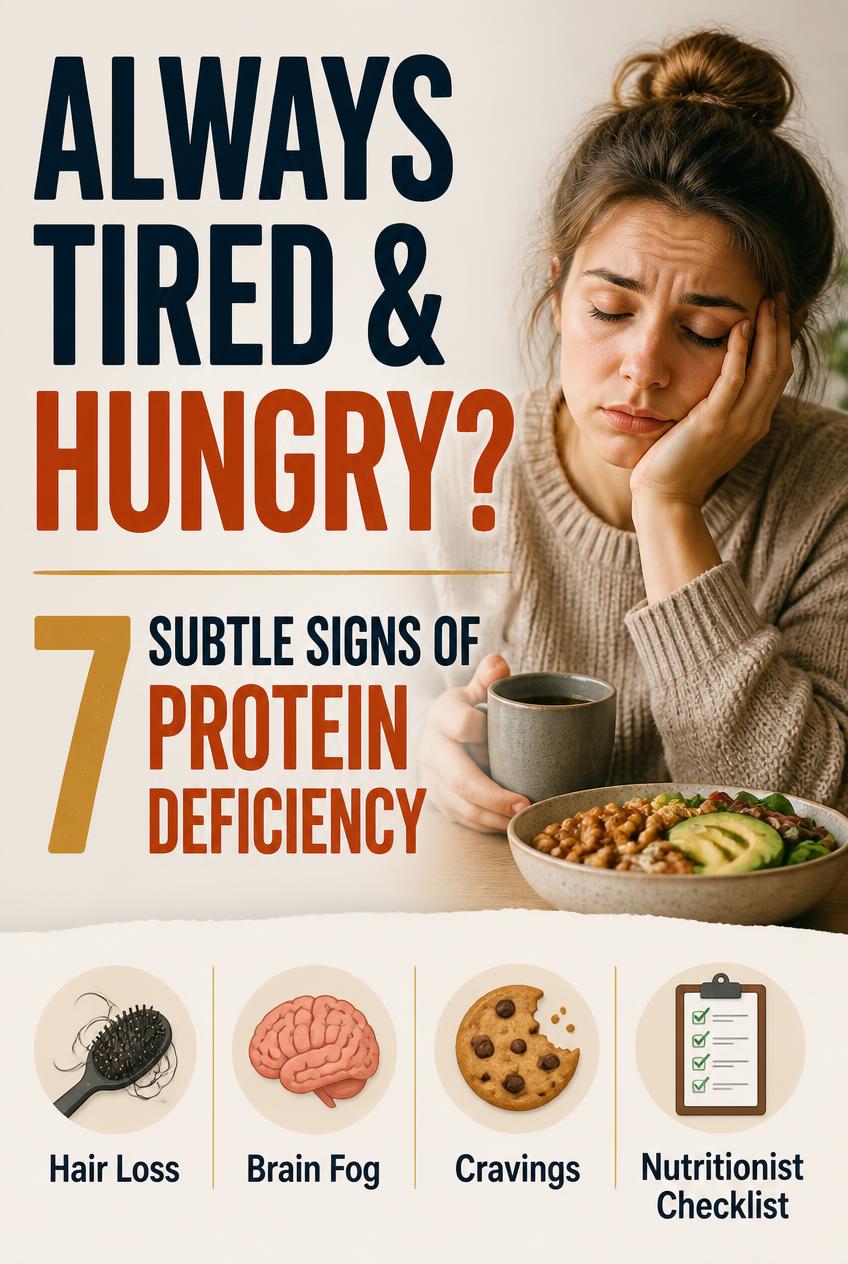
Visual Breakdown: Protein Deficiency Red Flags
Scroll sideways to watch physicians and sports dietitians explain physical warning signs of low protein intake:
GreaterGoods Digital Food Kitchen Scale
Most people underestimate their protein portions by 40%. This ultra-precise digital scale ensures you hit your exact 30g protein targets without guesswork.
7 Subtle Signs of Protein Deficiency to Watch For
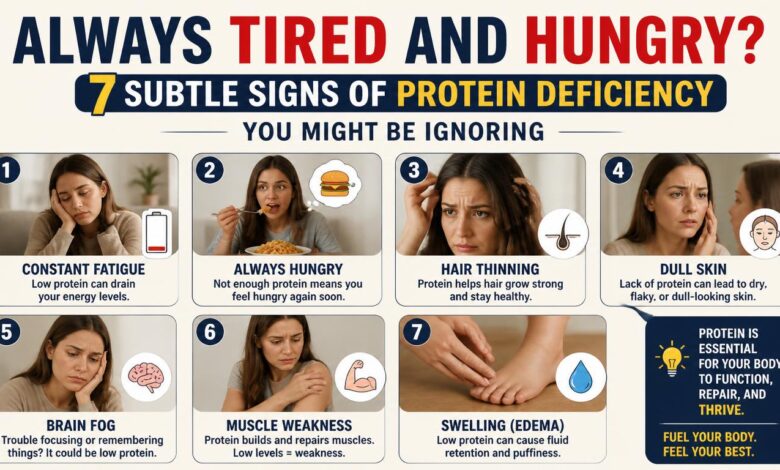
1. Constant Mid-Day Cravings (Especially for Sugar)
If you feel hungry every ninety minutes after eating, your meals are likely carb-heavy and protein-poor. Protein blunts the speed at which carbohydrates hit your bloodstream, preventing the sharp insulin spikes and subsequent blood sugar crashes that trigger intense sugar urges.
2. Persistent Post-Workout Muscle Soreness
Mild muscle soreness (DOMS) for 24 to 48 hours is normal after lifting weights. However, if your muscles feel weak, heavy, and intensely sore for four or five days after an ordinary gym session, your muscle protein synthesis rate is stalling due to an inadequate amino acid supply.
3. Hair Thinning, Brittle Nails, and Peeling Cuticles
Your hair, skin, and nails are constructed primarily of structural proteins like keratin, collagen, and elastin. When your dietary intake drops, your body halts non-vital hair follicle production to save amino acids for heart and liver maintenance, leading to telogen effluvium (diffuse shedding).
4. Brain Fog, Low Mood, and Afternoon Fatigue
Crucial neurotransmitters like dopamine, epinephrine, and serotonin are synthesized from specific dietary amino acids (such as tyrosine and tryptophan). Without sufficient dietary protein, your brain struggles to maintain neurotransmitter balance, leaving you sluggish, unmotivated, and mentally exhausted by 2:00 PM.
5. Getting Sick More Frequently
Your immune defense system relies directly on antibodies (immunoglobulins), which are complex protein molecules. Chronic low protein intake suppresses T-cell production and weakens mucous membrane barriers, leaving you vulnerable to catching every cold floating through your office.
6. “Skinny Fat” Body Composition Changes
If the scale goes down but your waistline looks softer and less defined, you are losing skeletal muscle rather than visceral body fat. Preserving muscle requires resistance stimulus combined with adequate amino acids. Without protein, a calorie deficit burns away muscle first.
7. Mild Swelling or Puffiness in Ankles and Hands
One of protein’s vital physiological jobs is maintaining oncotic pressure in your bloodstream via circulating **albumin**. When protein levels drop significantly, fluid leaks out of blood vessels into surrounding tissues, causing mild, unexplained puffiness in your feet, calves, and fingers.
Glass Bento Meal Prep Containers (3-Compartment)
Never get caught protein-deficient at work. These leak-proof glass containers keep lean poultry, hard-boiled eggs, and fresh vegetables neatly separated and ready to grab.
Protein Deficiency Symptoms vs. Quick Whole-Food Fixes
How to counter common low-protein symptoms with simple supermarket adjustments:
| Red Flag | Underlying Biological Cause | Immediate Whole-Food Fix |
|---|---|---|
| Mid-Day Sugar Cravings | Rapid glycemic spikes and drops | Add 1 cup cottage cheese or Greek yogurt |
| Prolonged Muscle Soreness | Stalled muscle protein synthesis (MPS) | Target 35g protein within 2 hours of gym |
| Hair Thinning / Weak Nails | Keratin synthesis down-regulation | Incorporate whole eggs, salmon & bone broth |
| Afternoon Brain Fog | Low dopamine & tyrosine supply | Pair lunch carbs with 5 oz lean chicken or tuna |
Amelia’s 3 Rules to Reverse Low Protein Intake
Fixing inadequate protein does not mean stuffing down massive dry steaks all day. Follow these three practical rules to balance your intake effortlessly:
- Anchor Every Meal with 30 Grams First: Before planning rice, pasta, or sides, select your primary protein foundation: 5 ounces of poultry, 6 ounces of white fish, 1 cup of Greek yogurt, or 1 block of tempeh.
- Upgrade Your Breakfast: If your morning begins with bagels, cereal, or fruit smoothies, you start the day in a protein deficit you will struggle to overcome by dinner. Shift to our 30g protein breakfast recipes.
- Weigh Your Portions for 7 Days: You do not have to weigh food forever, but using a digital scale for one week will quickly reveal whether your “four-ounce” chicken breast is actually only two ounces.
Get Amelia’s 7-Day High-Protein Recovery Blueprint
Delicious, whole-food recipes designed to easily hit 120g+ protein daily with complete grocery lists and pre-calculated macros.
Amelia’s Final Word: Listen to Your Body’s Subtle Signals
Your body is constantly communicating with you. When you ignore the early signs of protein deficiency, it does not mean your willpower is weak—it means your cells are begging for structural fuel.
Focus on hitting 0.8 to 1.0 grams of complete protein per pound of goal body weight, enjoy wholesome meals, and watch your energy, recovery, and hair bounce back naturally.
Frequently Asked Questions
How quickly do signs of low protein improve once I eat more?
Appetite stability, sugar craving reduction, and daytime mental focus often improve within 24 to 48 hours of hitting 30g protein per meal. Structural recovery (like hair regrowth, nail strength, and muscle tone) typically takes 6 to 12 weeks of consistent intake.
Can a blood test detect protein deficiency?
Standard comprehensive metabolic panels (CMP) test total serum protein and albumin levels. However, because your body robs muscle tissue to keep blood levels stable, serum albumin often remains normal until deficiency becomes severe. Tracking daily dietary gram intake is far more sensitive.
Are plant-eaters more prone to protein deficiency?
Vegetarians and vegans can easily meet their protein requirements, but they must be more intentional about selecting dense sources like tempeh, seitan, lentils, and tofu rather than relying solely on grains, nuts, and salads.