
Stuck at the Same Weight for 3 Weeks? Why Eating LESS Is the Wrong Move

Discovering how to break a weight loss plateau without slashing your daily calories down to starvation levels is what keeps your metabolism firing and your sanity intact. You did everything right for eight weeks, watched the scale drop steadily, and celebrated the progress—and then suddenly, for three full weeks, the digital numbers have refused to move an inch.
Your immediate instinct is panic: cut another 400 calories from your plate or double your daily cardio.
That extreme response is where most diets break. Hitting a plateau does not mean your body is broken; it means your biology is adapting to a lighter body weight. Slashing food further only spikes cortisol, drives down spontaneous movement, and triggers stubborn water retention that masks true fat loss. Below, I explain the metabolic science behind weight loss stalls and share four strategic steps to kickstart fat burning again.
Get Amelia’s Plateau Breaker Checklist
Download our free printable 7-day plateau audit worksheet, diet break protocol, and body measurement tracker straight to your inbox.
How to Break a Weight Loss Plateau by Understanding Metabolic Adaptation
Before taking action, you need to know why your progress stopped. A true stall is defined as no change in your 7-day average scale weight or body measurements for at least three consecutive weeks.
When your weight stalls, it is typically driven by three quiet biological shifts:
- A Lighter Body Burns Less Fuel: If you lose 15 pounds, moving your body around throughout the day requires less kinetic energy. Your Basal Metabolic Rate (BMR) naturally drops by 100 to 180 calories simply because you are carrying less mass.
- The NEAT Drop: Non-Exercise Activity Thermogenesis (NEAT) accounts for pacing, fidgeting, posture, and casual steps. When your brain senses a prolonged calorie deficit, it subconsciously makes you sit more, move slower, and blink less, slashing daily burn by up to 300 calories without your conscious awareness.
- Elevated Cortisol Masking: Prolonged caloric restriction stresses your adrenal glands. High cortisol elevates aldosterone, holding extra water inside your fat cells. You may still be losing subcutaneous fat tissue, but temporary water weight keeps the bathroom scale locked in place.
→ Launch the Free Calorie Calculator
Explore our related weight fluctuation breakdowns and macro blueprints:

Visual Breakdown: The Science of Breaking a Weight Plateau
Scroll sideways to watch sports scientists and doctors explain how to restart stalled fat loss:
RENPHO Smart Body Measuring Tape, Bluetooth App, 60in, for Weight Loss
For Weight Loss & Fitness, Tracks Waist, Hip, Bust, Arms, Retractable, Multi-Metric Tracking, Gym Accessories, Workout Gifts.
4 Practical Steps to Restart Fat Loss Without Slashing Food
1. Perform an Honest 3-Day “Creep” Audit
Before changing your diet plan, audit your tracking precision for 72 hours. Caloric creep happens invisibly:
- Unmeasured cooking oil in the skillet (+120 kcal per tablespoon)
- Creamy coffee splashes (+80 kcal twice a day)
- Generous peanut butter spoonfuls (+100 kcal over measured portion)
- Finishing the children’s leftover chicken nuggets or fries
These small untracked extras easily add up to 300 to 400 calories daily, silently closing your energy deficit. Weigh every bite for three days to ensure your theoretical deficit matches reality.
2. Lock In a Daily Step Floor (Restore Your NEAT)
Instead of adding exhausting high-intensity cardio that spikes hunger, set a strict baseline step goal. If your phone reveals that your average daily steps drifted down from 9,000 to 5,500 over the past month, your energy expenditure dropped by nearly 200 calories per day.
Aim for a consistent daily floor of 8,000 to 10,000 steps. Brisk walking burns fat cleanly, preserves recovery, and prevents the compensatory appetite surge caused by endless treadmill sprints.
3. Implement a 7-Day Structured “Diet Break”
If you have been in a continuous caloric deficit for over twelve weeks, your leptin levels are low, thyroid hormones (T3) are down-regulated, and psychological diet fatigue is peaking.
Bring your food intake back up to your calculated maintenance calories for seven full days. Keep protein high, increase complex carbohydrates (potatoes, oats, rice), and continue lifting weights. A structured diet break restores glycogen, lowers chronic cortisol, flushes masked water weight, and resets metabolic hormones so your deficit works effectively again when resumed.
4. Prioritize 7 to 8 Hours of Deep Sleep
Chronically sleeping under six hours drops insulin sensitivity by up to 30% and spikes systemic cortisol. In clinical sleep studies, participants on the same calorie deficit lost 55% less body fat and 60% more muscle when sleep-restricted compared to well-rested peers. Going to bed 45 minutes earlier often breaks a two-week scale stall in forty-eight hours.
Fitbit Inspire 3 Health & Fitness Tracker
Subconscious drops in daily walking are the #1 hidden cause of weight plateaus. This lightweight tracker monitors your daily step floor, active minutes, and resting heart rate trends.
Is Your Plateau Real or False? (Quick Diagnostic)
Compare your symptoms against this diagnostic framework before making dietary cuts:
| Check Indicator | False Plateau (Masked Water Weight) | True Plateau (Energy Equilibrium) |
|---|---|---|
| Stall Duration | Under 14 days | 3 to 4+ weeks with zero shift |
| Waist / Hip Tape Measurements | Shrinking by 0.25 to 0.5 inches | Completely unchanged |
| Recent Workout Routine | Started new lifting program (soreness swell) | Same routine, decreased workout intensity |
| Daily Step Count | Maintained above 8,000 steps | Drifted down by 2,000 to 4,000 steps |
Amelia’s 3 Rules When Progress Stops
Keep these golden rules posted on your refrigerator door whenever the scale feels frozen:
- Never React to a Single Week: Weight loss is not linear. Hormones, sodium intake, and digestive transit time create natural 3-pound swings. Judge progress exclusively by 7-day rolling averages over three weeks.
- Protect Your Muscle at All Costs: If you must adjust food, never lower protein. Maintain your 0.8 to 1.0 grams per pound of goal weight. Trim only 100 to 150 calories from added dietary fats or simple starches.
- Celebrate Non-Scale Victories: Are your clothes looser? Is your gym strength climbing? Are your energy levels stable? If yes, body recomposition is occurring—do not let a bathroom scale tell you that your hard work isn’t working.
Get Amelia’s 7-Day Diet Break Protocol
Learn how to safely eat at maintenance calories for one week to reset your metabolic hormones and restart fat loss without gaining fat.
Amelia’s Final Word: A Plateau Is a Milestone, Not a Failure
Hitting a weight plateau simply means your body has adapted to your new, smaller size. It is proof that your previous deficit worked.
Do not punish your body with starvation or frantic cardio sessions. Audit your portions, protect your daily steps, consider a structured maintenance break, and let your metabolism reset naturally. Consistency over months always wins.
Frequently Asked Questions
How long should I wait before changing my calories during a stall?
Wait at least three full weeks (21 days) of flat 7-day average weights and unchanging waist measurements before reducing calories. Adjusting your plan every four days introduces too much chaos and prevents you from observing true physiological trends.
Will taking a diet break make me gain back all my lost fat?
No. Eating at true maintenance calories means energy in equals energy out. While the scale may rise by 1 to 3 pounds due to replenished muscle glycogen and extra water, that is not body fat. Once you resume your deficit, that water clears quickly and fat loss resumes.
Is “starvation mode” a real medical condition?
The internet myth that eating too little makes your body magically store fat out of thin air is physiologically impossible. However, adaptive thermogenesis is very real: severe restriction lowers your body temperature, slows thyroid output, and drastically reduces subconscious movement (NEAT), reducing daily burn by hundreds of calories.

Written by Amelia
Nutritionist & Gym EnthusiastAt 38, I balance gym training with developing practical nutrition breakdowns for everyday life. I focus on moderate energy deficits, wholesome supermarket ingredients, and sustainable habits that protect long-term metabolic health.
Affiliate Disclosure: As an Amazon Associate, I earn from qualifying purchases. This means that if you click through and make a purchase, I may receive a small commission at no extra cost to you. I only recommend tools, tracking devices, and products I genuinely use and trust.
Medical Disclaimer: The nutritional breakdowns and metabolic guidance provided on this website are for educational and informational purposes only. If you suspect an underlying endocrine condition (such as hypothyroidism, PCOS, or Cushing’s disease), consult a physician or endocrinologist for comprehensive blood work.
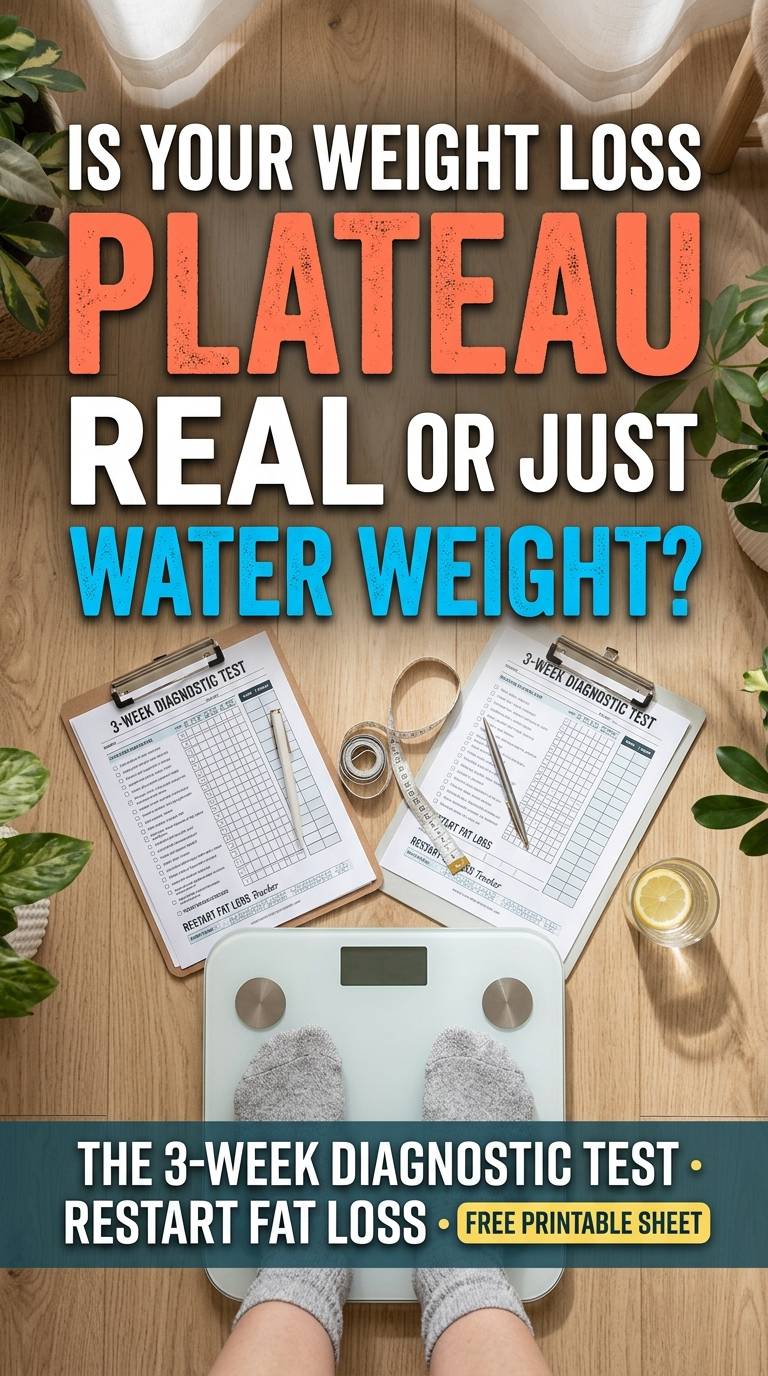
Get Your Free Plateau Diagnostic Sheet
A printable pocket guide: the 3-day calorie audit worksheet, step-count tracker, and 7-day maintenance refeed formula.