Collagen Peptides vs Gelatin: Which Is Better for Protein Recipes?
Navigating the World of Collagen Peptides and Gelatin
Are you feeling overwhelmed by the buzz surrounding collagen and gelatin? Understanding the distinctions between collagen peptides and gelatin can empower you to make informed culinary choices, especially if you are following high-protein, low-carb, or keto-friendly diets. Both ingredients boast distinctive benefits and culinary applications, making this guide invaluable for enhancing your meal preparation. Let’s dive into what sets collagen peptides and gelatin apart while exploring their unique advantages.
The Essence of Collagen Peptides and Gelatin
At their core, both collagen peptides and gelatin originate from collagen, a vital protein found in connective tissues. However, their characteristics and uses diverge substantially.
Collagen Peptides
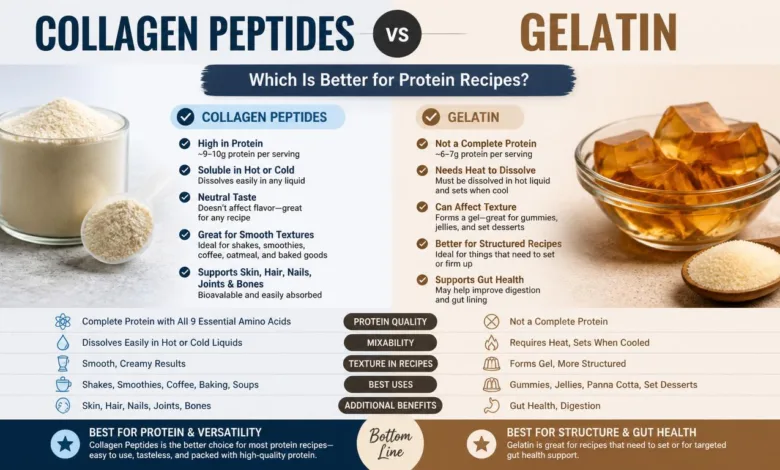
Collagen peptides undergo hydrolysis, a process that breaks down collagen into smaller chains of amino acids. This process not only enhances the bioavailability of collagen but also allows it to dissolve effortlessly in both hot and cold liquids. As a result, collagen peptides are exceptionally versatile, making them ideal for incorporation into smoothies, shakes, soups, and even baked goods without altering flavor or texture.
Gelatin
In contrast, gelatin is produced by boiling down collagen-rich parts of animal bones and skins, resulting in a substance that has thickening and gelling properties. It is a go-to ingredient for recipes requiring a firm texture, such as jellies, marshmallows, and numerous desserts. Gelatin brings a rich mouthfeel to dishes, enhancing both sweet and savory preparations.
Health Benefits You Should Know
Both collagen peptides and gelatin offer health benefits that resonate well with health-conscious eaters.
Collagen Peptides
Research suggests that collagen peptides can improve joint health, support skin elasticity, and even contribute to muscle mass maintenance. When included in your diet, they may bolster your body’s ability to recover from physical activity and support overall well-being.
Gelatin
Gelatin is not just a culinary delight; it also promotes gastrointestinal health. It contains glycine, an amino acid that helps strengthen the gut lining and improve digestion. The presence of gelatin can aid in satiety, making it easier to manage cravings between meals.
Cooking with Collagen Peptides and Gelatin
Understanding how to utilize collagen peptides and gelatin effectively can transform your cooking. Here’s how to optimize their incorporation into your recipes.
Versatility in Cooking
Both collagen peptides and gelatin can enhance a variety of dishes by enriching soups, smoothies, and desserts while boosting protein content.
- Smoothies: Add collagen peptides for a creamy texture and a protein punch without affecting the flavor.
- Desserts: Use gelatin when making panna cotta, fruit jellies, or any other dessert that requires a firm structure.
- Soups and Stews: Missed the protein in your broth? Throw in some collagen peptides for nutritious enhancement.
Practical Tips for Substituting Ingredients
Choosing the right ingredient for a recipe is crucial. This section will help you understand how to decide between collagen peptides and gelatin while ensuring your meals are seamless and delicious.
Assess Your Cooking Needs
Before you begin cooking, consider the nature of your recipe. Will it benefit from the gelling strength of gelatin, or is it looking for the protein boost that collagen peptides provide?
- Gelling Agent: If your intention is to create a firm texture in desserts or jellies, go for gelatin.
- Protein Addition: If your goal is to add protein without the added texture, collagen peptides are your best bet.
Mixing and Incorporation Techniques
Incorporating collagen peptides and gelatin into your dishes requires different techniques for maximum effectiveness.
-
Collagen Peptides: For optimal integration, mix collagen peptides with your liquid ingredients at a low temperature to avoid clumping. They dissolve quickly, making them perfect for liquids.
-
Gelatin: Before using gelatin, bloom it in cold water to allow it to hydrate fully. This process activates its gelling properties, ensuring a smooth result when added to hot mixtures.
Nutritional Breakdown
Knowing the nutritional content of these ingredients helps you make educated dietary choices, especially when adhering to low-carb or keto lifestyles.
Collagen Peptides
Typically, one scoop of collagen peptides contains approximately 10 grams of protein with negligible carbohydrates and fats. This makes collagen peptides an excellent addition for those aiming to maintain a low-carb intake without sacrificing protein.
Gelatin
For a tablespoon of gelatin, you generally receive about 6 grams of protein along with minimal carbs. This enables it to align well with keto dietary goals while also functioning as a versatile cooking ingredient.
Serving Suggestions and Recipes
Knowing how to serve dishes enhanced with collagen peptides and gelatin can elevate your meals to new heights.
Collagen Peptides
Incorporate collagen peptides effortlessly into your everyday drinks and dishes:
- Mix into smoothies for an energy boost.
- Stir into hot coffee or tea.
- Add to your morning oatmeal for added protein without altering the flavor.
Gelatin
Gelatin can provide a delightful twist to both savory and sweet dishes:
- Utilize in fruit-based desserts like mango gelée or strawberry panna cotta.
- Incorporate into savory broths, enriching chicken stock or vegetable broth for an umami hit.
Storage and Reheating Guidelines
Understanding how to store and reheat dishes containing collagen peptides and gelatin will ensure you maximize their shelf life and effectiveness.
Collagen Peptides
Store collagen peptides in a cool, dry location away from moisture. No refrigeration is necessary for the powdered form, making them convenient to keep at hand for daily use.
Gelatin
Once gelatin has been integrated into a dish, leftovers should be stored in an airtight container within the refrigerator. Typically, gelatin-based dishes maintain their quality for about three to five days.
Common Cooking Mistakes to Avoid
Avoid pitfalls in your cooking adventures by being mindful of these common missteps when using collagen peptides and gelatin.
-
Using Gelatin in Cold Dishes: Ensure that gelatin is properly bloomed before integrating it into cold mixtures to avoid lumps.
-
Incorrect Timing for Collagen Peptides: To retain the nutritional benefits of collagen peptides, it is essential to add them post-cooking or when liquids are at lower temperatures.
Expert Tips for Achieving the Best Results
Here are some expert insights to ensure that you get the most out of your collagen peptides and gelatin.
- Flavor Layering: When preparing gelatin, incorporate flavorful broth for savory dishes. For desserts, elevate sweetness with extracts or fruit purees.
- Creativity with Flavors: Enhance your collagen peptide recipes by mixing them with flavored protein powders, adding uniqueness to your smoothies or oatmeal.
- Experimentation is Key: Don’t hesitate to play around with different blooming times for gelatin to achieve your desired texture.
Nutritional Advantages Recap
To sum it up, collagen peptides and gelatin both contribute to a healthful diet:
- Collagen Peptides: Support skin health, muscle recovery, and mobility.
- Gelatin: Enhances digestion and promotes feelings of fullness.
Conclusion: Elevate Your Culinary Skills
Arming yourself with knowledge about the differences between collagen peptides and gelatin can enrich your cooking experience and enhance your health journey. As you experiment with these incredible ingredients in various recipes, remember to play around with their unique properties to achieve your desired textures and flavors.
When planning your next cooking adventure, embrace the potential of collagen peptides and gelatin to transform your meals. From smoothies to desserts and stocks, the possibilities are endless. Happy cooking and enjoy your journey into the world of collagen and gelatin!