
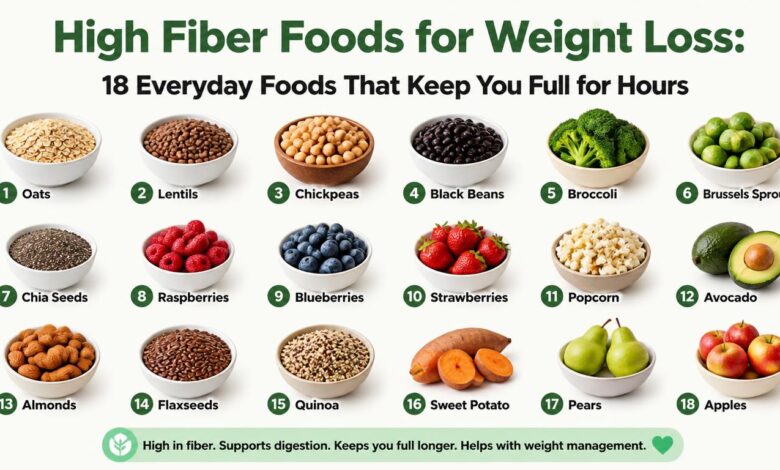
High Fiber Foods for Weight Loss: 18 Everyday Foods That Keep You Full for Hours
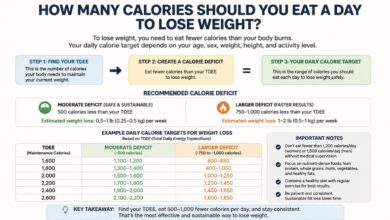
Most weight loss discussions revolve around cutting things out: cut carbs, cut fats, or cut portion sizes down to nothing.
Here is the nutrient I encourage everyone in my nutrition practice to add more of: dietary fiber.
When you eat enough fiber, staying in a calorie deficit stops feeling like a chore. Fiber slows down digestion, keeps blood sugar steady, and physically fills your stomach so cravings fade away naturally. Below are 18 of the best high fiber foods for weight loss, along with practical tips to add them to your weekly meals without complicated prep.
Download the Free High-Fiber Cheat Sheet & Tracker
Get our printable high-fiber grocery checklist, portion guide, and meal prep cheat sheet sent straight to your inbox.
How Fiber Promotes Natural Fat Loss
Fiber is unique because your body cannot actually digest it into absorbable calories.
Think of it this way:
Fiber travels through your digestive tract mostly intact. It provides physical bulk, carries water along with it, and feeds the beneficial bacteria living in your gut.
Prioritizing high-fiber foods provides three powerful benefits:
- Gentle Blood Sugar Curve: Soluble fiber forms a gel-like substance in your digestive tract, slowing carbohydrate breakdown and preventing rapid sugar crashes that trigger afternoon cravings.
- Long-Lasting Fullness: Fiber delays stomach emptying, keeping you feeling comfortably full for three to four hours after a meal.
- Gut Microbiome Support: When gut bacteria ferment prebiotic fiber, they produce short-chain fatty acids (SCFAs), which help regulate appetite and metabolic health.
- Looking for set calorie tiers? Check out the 1,200 Calorie Meal Plan, the 1,400 Calorie Meal Plan, and our 1,500 Calorie Meal Plan.
- Review our broader frameworks: the foundational 7-Day Weight Loss Meal Plan, our plant-focused Vegetarian Meal Plan, and the Calorie Deficit Meal Plan.
- Pair with recipes: check out High Volume Low Calorie Foods, Low Calorie Vegetables, and our quick Low Calorie Snacks.
- Active energy needs? Jump to the 1,800 Calorie Meal Plan or 2,000 Calorie Meal Plan.
Calculate your personal maintenance numbers with our free calorie calculator.
Amelia’s 3 Rules for Increasing Fiber Without Bloating
If your diet is currently low in fiber, jumping overnight to 40 grams can lead to uncomfortable bloating. Here are three simple guidelines I share with my clients:
- Increase Slowly Over Two Weeks: Add five grams of fiber every few days. Start by adding chia seeds to breakfast, then swap white rice for lentils or quinoa at dinner.
- Drink Water with Every Fiber Boost: Fiber absorbs water like a sponge. If you increase fiber without increasing water intake, digestion slows down significantly. Aim for plenty of fluids throughout the day.
- Aim for 28 to 35 Grams Daily: Most adults get barely 15 grams of fiber each day. Hitting 28 to 35 grams provides optimal digestive and metabolic support.
18 High-Fiber Foods for Weight Loss
All values are calculated per typical serving using USDA FoodData Central standards.
1. Beans and Legumes (Fiber & Protein Champions)
1. Cooked Brown & Green Lentils
Lentils require no soaking and cook in twenty minutes. A half-cup cooked provides about 115 calories, 9g protein, and 8g fiber. Toss into salads or simmer with clear vegetable broth.
2. Black Beans
Rich in resistant starch and anthocyanins. A half-cup of black beans provides roughly 110 calories, 7g protein, and 7.5g fiber. Excellent in wraps and grain bowls.
3. Chickpeas (Garbanzo Beans)
Firm, nutty, and versatile. A half-cup cooked contains about 135 calories, 7g protein, and 6g fiber. Roast them with cumin or toss with cucumber and lemon juice.
4. Edamame (Young Green Soybeans)
A complete plant protein source. One cup of steamed edamame in pods yields about 18g protein and 8g fiber for roughly 190 calories.
2. Whole Grains & Power Seeds
5. Chia Seeds
Two tablespoons deliver roughly 10g of fiber and 4.5g of protein for 140 calories. Stir into Greek yogurt or make overnight chia puddings.
6. Rolled Oats
Rich in beta-glucan, a soluble fiber proven to support heart health and satiety. A half-cup of dry oats delivers 150 calories and 4g of gut-friendly fiber.
7. Ground Flaxseed
Provides lignans, omega-3 fatty acids, and soluble fiber. Two tablespoons provide 75 calories and nearly 4g of fiber. Stir easily into smoothies or oatmeal.
8. Quinoa
A gluten-free seed cooked like a grain. One cup cooked yields about 220 calories, 8g protein, and 5g fiber, serving as an easy substitute for white rice.
9. Sprouted Whole-Grain Bread
Sprouted grains offer easier digestibility and higher fiber availability. Two slices provide roughly 160 calories, 10g protein, and 6g fiber.
3. High-Fiber Fruits
10. Fresh Raspberries
The highest fiber berry. One cup contains only 65 calories while packing a massive 8g of dietary fiber. Perfect on top of Greek yogurt.
11. Fresh Blackberries
Loaded with vitamin C and soluble fiber. One cup yields 62 calories and about 7.6g of fiber, keeping afternoon sweet cravings at bay.
12. Green Pears (Skin On)
One medium pear with skin contains about 100 calories and 5.5g of fiber. Keep the skin on, as that is where most fiber resides.
13. Crisp Apples (Skin On)
Rich in pectin, a natural soluble fiber that supports gut health. One medium apple provides roughly 95 calories and 4.4g of fiber.
4. Fibrous Vegetables
14. Steamed Broccoli
One cup of cooked chopped broccoli delivers only 55 calories along with 5g of dietary fiber and nearly 4g of plant protein.
15. Roasted Brussels Sprouts
One cup cooked contains about 60 calories and over 4g of fiber. Halve them and roast at high heat with garlic powder until crispy.
16. Sweet Potatoes (Skin On)
A medium baked sweet potato provides about 105 calories and 4g of fiber, along with complex carbohydrates that support exercise recovery.
17. Avocados
A nutrient-dense whole food. Half a medium avocado delivers healthy monounsaturated fats along with nearly 5g of fiber for about 120 calories.
18. Green Peas
One cup of cooked green peas provides about 125 calories, 8g protein, and over 7g of fiber. Excellent tossed into rice or egg scrambles.
Print This High-Fiber Grocery Checklist
Download the printable PDF guide with all 18 fiber-rich foods, simple recipe ideas, and our organized shopping list.
Your High-Fiber Grocery Shopping List
Stock these affordable staples to hit your daily 30-gram fiber goal with ease.
Beans & Legumes
- Dry brown or green lentils
- Canned black beans & chickpeas
- Frozen shelled edamame pods
- Frozen sweet green peas
Grains & Seeds
- Old-fashioned rolled oats
- Whole chia seeds
- Ground golden flaxseed
- Dry quinoa
- Sprouted whole-grain bread
Produce & Fruit
- Fresh raspberries & blackberries
- Green pears & crisp apples
- Broccoli crowns & Brussels sprouts
- Medium sweet potatoes
- Hass avocados (2-3)
Kitchen Seasonings
- Ground cinnamon
- Smoked paprika & garlic powder
- Ground cumin & sea salt
- Olive oil spray mister
Amelia’s Final Word: Focus on What to Add
Dieting often makes people feel restricted. But when you shift your mindset toward adding more fiber and whole foods to your meals, fat loss feels completely different.
Add a spoonful of chia seeds to breakfast, put half a cup of black beans into your lunch bowl, and roast a tray of broccoli for dinner. You will feel energized, your digestion will run smoothly, and your hunger will stay in check.
Give your body the real nutrients it thrives on, drink plenty of water, and stay consistent.
Frequently Asked Questions
What is the difference between soluble and insoluble fiber?
Soluble fiber (found in oats, beans, chia seeds, and berries) dissolves in water to form a gel, slowing digestion and helping balance blood sugar. Insoluble fiber (found in vegetable skins, whole grains, and seeds) adds bulk to stool and supports regular digestion. A healthy diet benefits from both.
Can fiber supplements replace high-fiber whole foods?
Fiber supplements like psyllium husk can help with regularity, but they lack the vitamins, minerals, antioxidants, and water volume naturally packed into whole foods like lentils, berries, and vegetables. Whole groceries should always form your primary foundation.
Can you eat too much fiber?
Yes, consuming excessive fiber (over 50 to 60 grams daily), especially without adequate fluid intake, can lead to gas, abdominal cramping, and decreased absorption of certain minerals. For most adults, 28 to 35 grams daily is an effective target.

Written by Amelia
Nutritionist & Gym EnthusiastAt 38, I design practical, fiber-rich meal plans that support active lifestyles and healthy body composition. I focus on whole groceries and simple cooking habits that protect gut health and make weight management enjoyable.
Get Your Free High-Fiber Guide PDF
Receive the full 18 high-fiber food reference cards, portion charts, and printable grocery checklist delivered straight to your inbox.